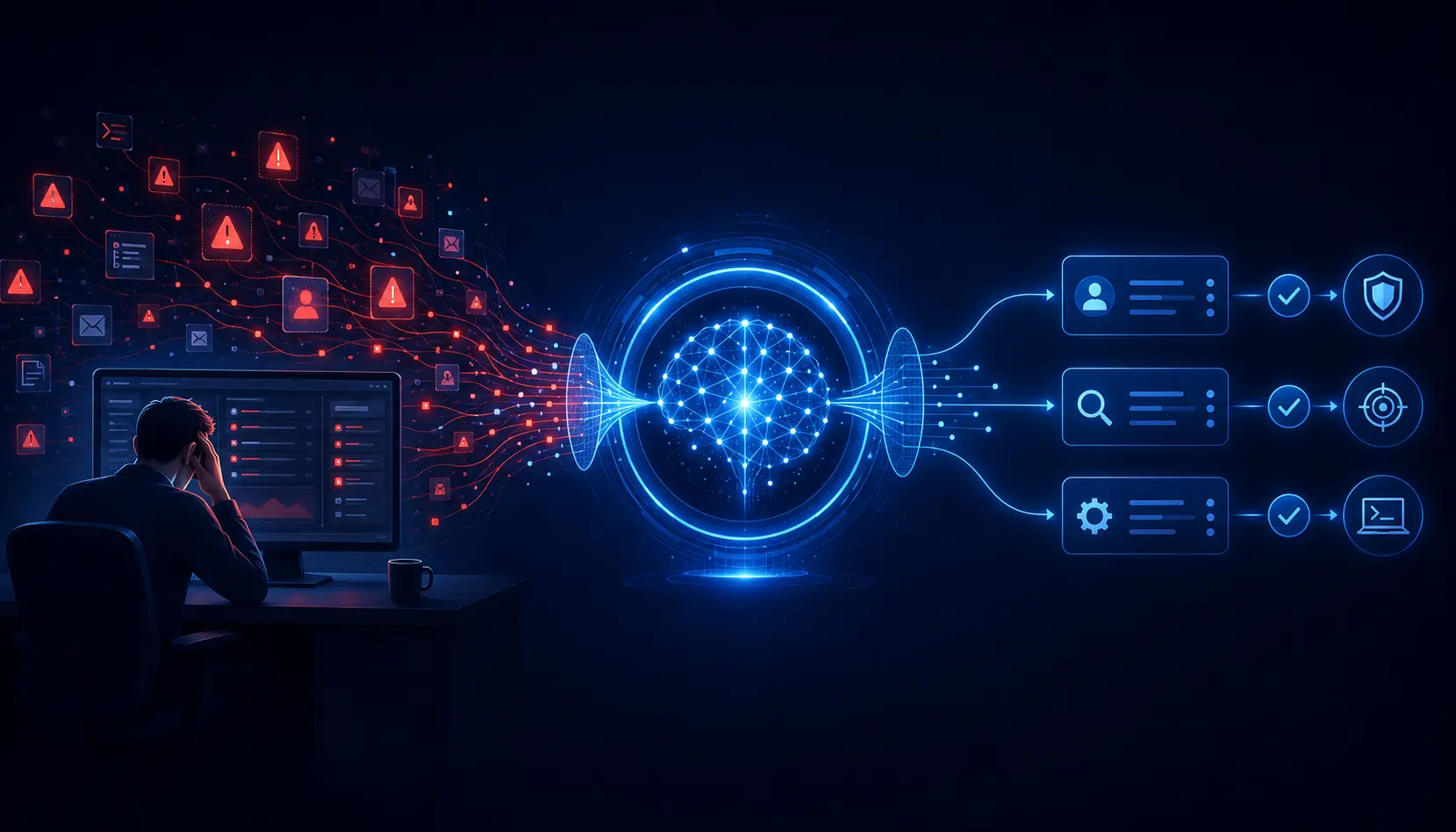
What’s inside

Security operations are no longer defined simply by how many alerts a team handles or how many tools it runs. They are increasingly defined by how quickly the operation can detect, understand and respond to what is happening around it.

The Tempo of Modern Security Operations examines the measurable gap between the speed of modern threats and the pace at which security teams operate. Drawing on data from CrowdStrike, Mandiant, Tines and IBM, this brief explores:

  • How quickly attackers are moving across environments
  • What the latest threat intelligence reveals about the pace of intrusion
  • How much security-team time is consumed by manual, repetitive work
  • What security AI and automation are associated with in response time and breach cost
  • Why first-line triage is a practical point of leverage for improving operational tempo

The brief brings these findings together into a simple principle: put speed where it is most available, and keep human attention where judgement matters most. Download it to see what a well-matched security operation looks like, and how to assess your own SOC’s tempo against the pace of the environment it defends.

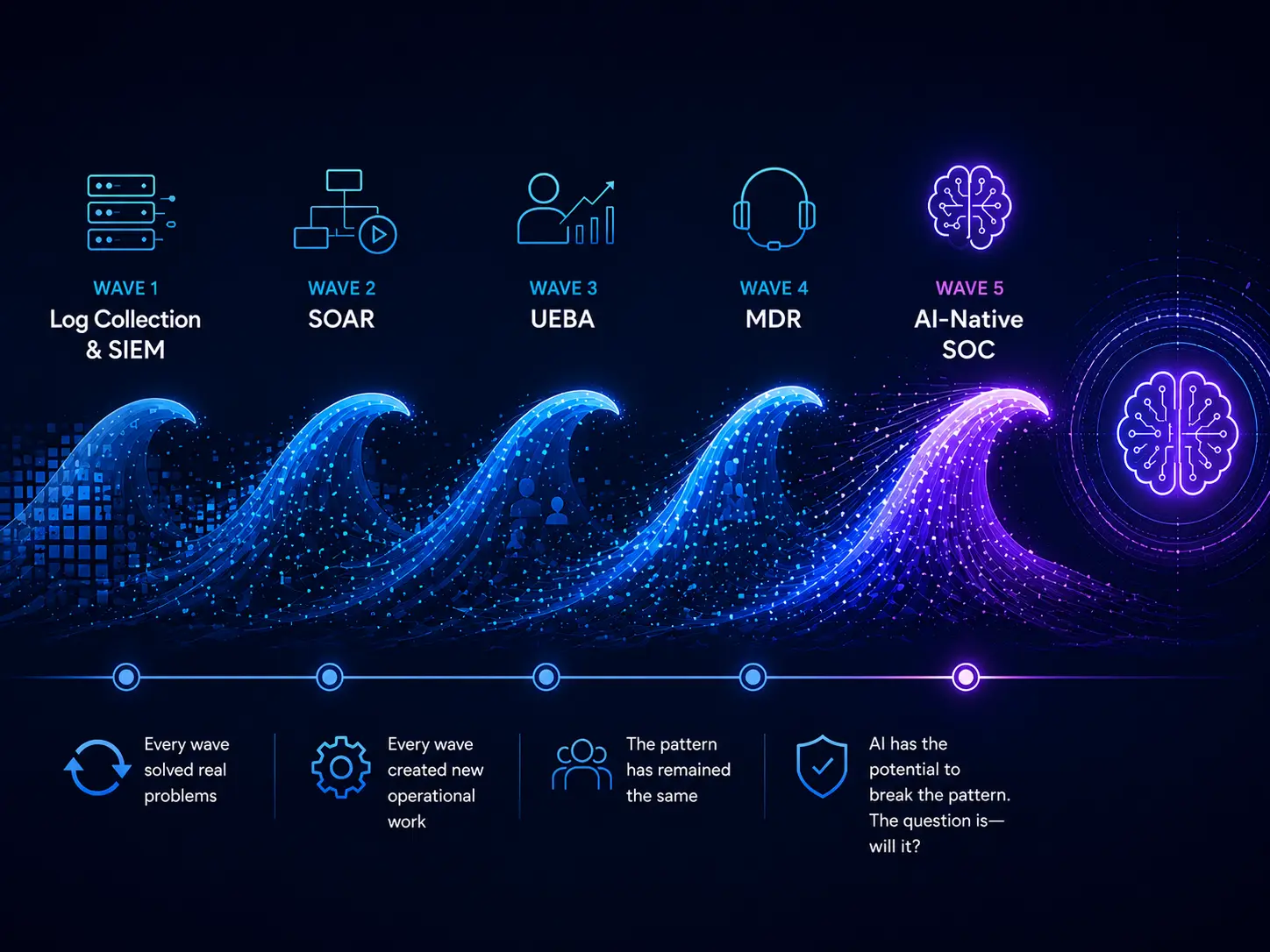
Every wave of security operations automation has promised the same thing: less work and faster response for security teams.

Every wave has delivered genuine innovation. Every wave has also created a new form of operational work that eventually found its way back to the customer.

This isn’t because the technology failed. Each wave solved a real problem. But each also shifted part of the operational burden elsewhere.

That repeating pattern is worth remembering as the industry enters its next phase.

AI is the fifth major wave of SOC automation, and it has the potential to change security operations more profoundly than anything before it. The question is not whether AI will transform the SOC. It already is.

The real question is whether this wave finally breaks the pattern.

At the heart of every automation wave is the same tension:

The vendor sells a capability; the customer buys an outcome.

The gap between the two is where the operational work lives.

A Familiar Cycle

Every major evolution in the SOC has followed a remarkably similar path.

Wave One: Log Collection & SIEM

Centralised security telemetry, correlate events and detect attacks that individual tools would miss.

Detection rules required constant tuning. New applications generated new logs. Environments evolved faster than detection logic could keep pace.

Over time, many SIEMs quietly redefined themselves as compliance-driven log stores with detection features. The detection promise didn’t disappear—it moved to the next wave.

Wave Two: SOAR

Automate repetitive investigation and response. The early phase of overload of alerts and incidents called for automated responses and it defined the era of Playbooks which would orchestrate enrichment, containment and response.

Automation itself required maintenance. APIs changed. Infrastructure evolved. Workflows had to be updated. Playbooks became software projects demanding continuous engineering effort.

Automation reduced operational work. It didn’t eliminate it. The category consolidated rapidly, and SOAR is now largely a capability embedded within broader security platforms rather than a standalone category.

Wave Three: UEBA

Use behavioural analytics to detect attacks that traditional correlation rules missed and others demonstrated genuine value in applying statistical models to security operations.

Behavioural baselines required constant tuning because anomaly is not the same as malicious activity. Operational noise grew alongside the environment, demanding continuous refinement.

The capability survived, but the category largely disappeared as UEBA became another feature within broader security platforms.

Wave Four: MDR

Deliver outcomes instead of technology. Managed Detection and Response gave organisations access to skilled analysts and continuous monitoring without requiring them to build their own SOC.

Customers still validated business context, approved response actions and completed investigations. Fixed-price service models naturally encouraged automated triage and templated escalations.

The vendor delivered detection outputs. The customer often remained responsible for delivering the final operational outcome.

Across four generations of security operations, the pattern remained remarkably consistent.

Why the Pattern Persisted

Three structural reasons explain why.

First, the vendor sells a capability while the customer buys an outcome. Every wave delivered its capability honestly. Every wave also assumed someone would perform the remaining operational work.

Second, every automation layer requires ongoing authoring and maintenance. Rules for SIEM. Playbooks for SOAR. Behavioural baselines for UEBA. Escalation criteria for MDR. Someone has to create, tune and maintain those artefacts over time.

Third, environments evolve faster than automation. Cloud adoption, new identities, SaaS applications and changing attack techniques continually reshape the environment, forcing automation to adapt.

These are not vendor failures. They are structural properties of how security operations are bought and sold.

The AI Wave

Today’s AI-native SOC platforms introduce a fundamentally different capability.

Previous automation waves executed instructions.

AI produces judgement.

Rather than simply following predefined workflows, it can investigate alerts, prioritise competing evidence, generate hypotheses and recommend actions that previously depended on experienced analysts.

That represents a genuine shift in what technology is capable of doing.

But history suggests an important question.

If every previous wave created new operational work, what new work might AI create?

The New Labour Nobody Is Talking About

The answer is unlikely to involve writing detection rules or maintaining playbooks.

Instead, organisations will need to ensure AI systems continue making sound decisions as environments, threats and business priorities evolve.

That means defining organisational context, evaluating investigation quality, validating outputs and ensuring reasoning remains consistent over time.

Regulatory expectations will amplify the challenge. Organisations will increasingly require evidence explaining why decisions were made, how investigations were performed and whether automated actions remain defensible during audits.

These are the operational realities of deploying intelligent systems inside critical security functions.

The important question is not whether this work exists.

It is who performs it.

Will customers build new internal teams to maintain AI reasoning?

Or will vendors absorb that responsibility as part of the managed service?

Breaking the Pattern

The success of every automation wave should be measured not by how much work it automates, but by how much work it permanently removes.

The AI SOC will represent a genuine departure from previous generations only if vendors accept responsibility for more than the automation itself.

That means continuously improving guidance rather than asking customers to maintain it. Monitoring the quality of AI decisions rather than assuming they remain accurate forever. Treating governance, auditability and explainability as core service outcomes rather than optional features. And ensuring human expertise focuses on genuinely complex investigations rather than maintaining another automation platform.

One question: Is AI eliminating the human loop? The short answer is “NO” while AI can be an excellent assistant, it has not yet acquired the status of decision maker especially in security operations. The decisions in security operations are complex and are beyond technology, there are strategic business and cultural angles to them so yes human loop still stays.

What Buyers Should Ask

The most useful questions for an AI SOC vendor are no longer about model size or autonomy percentages.

They are:

  • Who maintains the AI as environments change?
  • Who evaluates the quality of its investigations?
  • Who adapts guidance as threats evolve?
  • Who carries the operational burden over the lifetime of the service?

Those questions reveal far more about the maturity of an AI SOC than any autonomy metric.

A Note on Our Own Position

Nordic SOC is a vendor in this category, and Vokter is our AI SOC. Everything in this article applies to us.

We believe AI should absorb operational complexity rather than create a new generation of specialists to manage it. That philosophy has shaped how Vokter has been designed, from its managed-outcome approach to its emphasis on defensible, explainable investigations.

Whether the industry ultimately breaks the pattern remains to be seen.

If, three years from now, customers are hiring AI SOC engineers to maintain their vendor’s guidance packs and prompts, the pattern held.

If they are not, something genuinely changed.

That may prove to be the real measure of whether AI transformed security operations, or simply repeated history.

About the Author

Harish Shukla, Head of Cyber Security & Managed Security Services at G’SECURE LABS

Harish leads cybersecurity operations across the EU region. With over 17 years of experience in cybersecurity and managed services, he brings deep expertise in security operations, cloud security, compliance frameworks, helping organizations strengthen resilience and achieve measurable security outcomes.

AI SOCs promises predictable security outcomes. Faster investigations. Lower analyst workloads. Quicker response. Better resilience.

Behind every fixed-price managed service, however, sits a variable that few buyers ever ask about: the cost of AI itself.

Today, the economics work. Frontier language models continue to improve, inference costs have generally trended downward over time, and vendors have been able to build compelling managed services on top of them.

But none of that is guaranteed.

If you’re a Nordic bank, a listed utility, or a global manufacturer signing a three-year managed SOC agreement, one question deserves far more attention than it currently receives:

What happens if the economics of frontier AI change?

AI Has Introduced a New Supply Chain into Cybersecurity

Traditional managed security services depended on people, processes and infrastructure.

AI-native security operations introduce a different dependency stack.

They rely on external AI providers, inference infrastructure, GPU availability, model release cycles, API capacity, regional hosting options and evolving regulatory requirements. Those dependencies sit beneath every investigation, every recommendation and every automated response.

For most buyers, they’re almost invisible.

But they influence the long-term economics and resilience of every AI SOC platform.

The Economic Shape of an AI SOC

An AI SOC has an unusual cost structure.

Its primary variable cost is inference.

Every alert rarely triggers a single AI request. Instead, it passes through a sequence of reasoning steps:

  • Normalisation
  • Correlation
  • Threat hypothesis generation
  • Evidence validation
  • MITRE mapping
  • Response recommendation
  • Investigation summary
  • Report generation

Much of that pipeline can run efficiently on lightweight models or deterministic code. But the reasoning layer—the part that decides whether a suspicious login represents legitimate travel or the first stage of an intrusion—is computationally expensive.

Now consider scale.

A mid-sized enterprise may generate tens of thousands of alerts every day.

Each investigation consumes multiple reasoning stages.

Inference quickly becomes one of the largest operating costs of delivering an AI-native SOC.

Meanwhile, customer pricing usually remains fixed.

Whether priced per endpoint, per user or as a managed outcome, customers expect predictable monthly costs.

That leaves the vendor operating between a fixed-price customer contract and a variable-cost AI supplier.

As long as inference costs remain stable, the model works well.

But what happens if they don’t?

Four Ways the Economics Can Change

  1. Model pricing changes

Enterprise AI pricing has already evolved several times.

Reasoning-focused models cost significantly more than lightweight models, and the industry is steadily moving toward more sophisticated reasoning because that is precisely what customers value.

The assumption that costs will always decline is optimistic rather than guaranteed.

  1. Model performance improves

Suppose next year’s frontier model delivers dramatically better investigations.

Customers will naturally expect vendors to use it.

If vendors don’t adopt it, they risk falling behind.

If they do adopt it, operating costs may increase significantly.

Better AI doesn’t always mean cheaper AI.

  1. Platform availability changes

API rate limits evolve.

Capacity guarantees are negotiated rather than permanent.

Models are retired.

New versions require prompt redesign, evaluation, testing and pipeline optimisation.

None of those costs appear on an inference invoice, but they represent real engineering investment that directly affects service delivery.

  1. Geopolitics reshapes AI infrastructure

Today’s frontier AI ecosystem is concentrated among a relatively small number of providers.

European security providers therefore inherit broader geopolitical dependencies around data residency, export controls, infrastructure concentration and evolving regulatory expectations.

Even organisations with strong sovereignty requirements may ultimately depend on AI infrastructure beyond their direct control.

None of these scenarios are catastrophic.

But each should form part of a buyer’s due diligence.

Why Security Is Different

Many AI products can absorb changing AI economics.

A productivity assistant might reduce usage, introduce premium features or accept slightly higher response times.

A managed SOC cannot.

Security operations are governed by service levels, response commitments and customer expectations.

You cannot investigate only half of a ransomware precursor because inference has become expensive.

You cannot delay incident reasoning because API capacity is constrained.

The reasoning itself is the product.

That makes economic resilience just as important as model intelligence.

What Buyers Should Really Ask

Rather than asking whether a vendor uses AI, buyers should ask how resilient that AI platform is.

Questions worth asking include:

  • Can the investigation pipeline operate across multiple AI providers?
  • How much of the workflow depends on expensive frontier reasoning models?
  • Which parts of the investigation are deterministic rather than AI-driven?
  • Can the platform run within sovereign or dedicated environments if required?
  • Would customers experience pricing or service changes if inference economics shifted?

These questions reveal far more about a platform’s long-term viability than a discussion about model names.

Designing for Economic Resilience

The strongest AI SOC platforms are likely to share several architectural characteristics.

They separate deterministic workflows from reasoning tasks.

They reserve expensive reasoning only for investigations that genuinely require it.

They remain portable across multiple model providers rather than depending on a single ecosystem.

They support sovereign, dedicated or on-premises deployments where operational or regulatory requirements demand them.

Most importantly, they protect customers from fluctuations in the underlying AI market rather than passing those risks directly into service pricing.

Where Vokter Fits

Vokter is delivered as a managed security outcome rather than a token-based AI service. Its investigation pipeline is designed to be model-portable, uses tiered inference to reserve advanced reasoning for the most complex investigations, combines deterministic automation with AI-driven analysis, and supports EU-hosted as well as dedicated deployment models where required.

That approach is about more than compliance.

It is about ensuring that changes in the AI landscape do not become changes in the customer’s security operations.

The Next Competitive Advantage

The first generation of AI SOC platforms will compete on investigation quality.

The next generation will compete on resilience.

Not simply resilience against cyber-attacks.

Resilience against changes in the AI ecosystem itself.

The question for buyers will no longer be whether a vendor uses AI.

It will be whether that platform can continue delivering the same security outcomes if AI pricing, infrastructure or availability changes tomorrow.

Those architectural decisions may ultimately prove just as important as the intelligence of the models themselves.

For decades, cybersecurity has been defined by innovation. Every major wave of technology addressed a genuine gap in enterprise defense. Firewalls secured networks. Endpoint protection evolved into EDR. SIEM brought visibility. XDR connected signals across environments. Cloud security addressed new attack surfaces. Identity became the new perimeter.

Each advancement solved a real problem.

Today, however, the industry finds itself in a different phase. The conversation has shifted from solving new problems to expanding existing products. Every release introduces more capabilities, more dashboards, more AI assistants, more analytics, more integrations, and more modules. Security platforms are no longer judged by how effectively they solve a problem, but by how many capabilities they can claim.

This is feature inflation.

Unlike price inflation, feature inflation doesn’t increase the cost of buying software. It increases the cost of using it.

The race no one intended to run

No cybersecurity vendor sets out to build unnecessary complexity. Feature inflation is a natural outcome of a highly competitive market.

When detection capabilities begin to converge, vendors compete on breadth. If every platform offers strong endpoint detection, the next release adds cloud posture management. The next adds identity analytics. Then attack surface management, threat intelligence, exposure scoring, automation, AI copilots, executive reporting, and countless other enhancements.

The result is a market where every product promises to be a platform.

For buyers, distinguishing meaningful innovation from incremental additions becomes increasingly difficult.

This isn’t because innovation has stopped. Far from it. Many of today’s capabilities are technically impressive. The problem is that innovation is increasingly measured by what a product contains rather than what it eliminates.

Every feature has an operational cost

Software features are rarely free. Every new capability introduces decisions.

  • Should it be enabled?
  • Who owns it?
  • How should it be configured?
  • What happens when it generates alerts?
  • How does it integrate with existing workflows?
  • Who maintains it?

These questions rarely appear in product demonstrations, yet they define the day-to-day reality of operating a modern security program.

A security team doesn’t simply inherit another capability. It inherits another responsibility.

Over time, these responsibilities accumulate. Analysts learn multiple interfaces. Administrators manage overlapping policies. Teams spend more time understanding how tools interact than improving how security operates.

Ironically, products designed to reduce risk can increase operational overhead if every enhancement demands additional attention.

AI is accelerating the cycle

Artificial intelligence has introduced extraordinary opportunities for cybersecurity. It can accelerate investigations, identify patterns at scale, summarize complex incidents, and reduce repetitive work.

However, AI is also accelerating feature inflation.

Many products now include AI chat interfaces, AI assistants, AI-generated summaries, AI recommendations, AI scoring, AI search, and AI copilots. While each capability may provide value in isolation, together they risk becoming another layer of functionality that users must understand, evaluate, and trust.

The industry’s challenge is no longer whether AI can generate insights. It is whether those insights simplify decisions or merely create another stream of information to review.

Technology should reduce cognitive load, not redistribute it.

Buyers are asking different questions

The way enterprises evaluate cybersecurity solutions is quietly changing.

For years, procurement conversations revolved around feature matrices.

  • Does it support this integration?
  • Does it cover this framework?
  • Does it include this capability?

These questions remain important, but they are no longer sufficient.

Security leaders increasingly operate in environments where skilled personnel are limited, regulatory obligations are expanding, and budgets are expected to deliver measurable outcomes. Under those conditions, the defining question is no longer, “What else can this platform do?”

It is, “What operational burden does this platform remove?”

That distinction is subtle but significant.

Removing twenty hours of repetitive investigation each week may create more value than adding twenty new capabilities that require continuous management.

The next era won’t be won by adding more features

Feature inflation is a symptom of an industry that has spent years equating innovation with expansion. More capabilities, broader platforms, and longer release notes have become the default way to demonstrate progress.

But customers aren’t asking for more software to manage. They’re asking for less work to do.

The next generation of cybersecurity won’t be defined by who offers the most features. It will be defined by who removes the most operational friction.

That means technology should no longer stop at detecting threats or presenting recommendations. It should take responsibility for the repetitive work that follows triaging alerts, gathering evidence, correlating context, documenting findings, and initiating the right response. These are not activities that create strategic value; they are the operational overhead that prevents security teams from focusing on the decisions only humans can make.

This shift requires a different way of thinking about cybersecurity products. Instead of asking, “What new capability can we add?” we should be asking, “What work can we eliminate?”

That philosophy is what has shaped our thinking behind Vokter.

We didn’t set out to build another dashboard, another AI copilot, or another layer of analytics. Enterprises already have powerful EDRs, SIEMs, XDR platforms, and threat intelligence solutions. Adding another console to monitor would simply contribute to the very problem the industry is trying to solve.

Instead, Vokter was designed around a different premise: keep the security stack organisations already trust, but remove the manual effort required to operate it. Rather than replacing existing tools, it works across them—autonomously triaging alerts, investigating incidents, correlating evidence, recommending actions, and producing the documentation analysts would otherwise create manually.

That isn’t about adding another feature.

It’s about removing thousands of repetitive tasks that quietly consume the capacity of every security operations team.

As our industry enters its next phase, I believe we’ll stop asking which platform has the longest feature list. We’ll start asking a far more meaningful question:

How much operational effort did this platform eliminate?

The cybersecurity platforms that shape the next decade won’t be the ones that add the most capabilities. They’ll be the ones that remove the most manual work freeing security teams to focus on judgement, resilience, and the threats that truly matter.

About Author

Fredrik Jubran, Vice President at G’Secure Labs, leads global cybersecurity strategy and operations. With over two decades of extensive experience across IT and cybersecurity landscape, Fredrik brings deep domain expertise in Security Operations Center (SOC), Managed Detection & Response (MDR), Governance & Compliance (GRC), and cloud-security services.

For most of the past twenty years, cybersecurity innovation has followed a familiar pattern.

When organisations became connected, we built firewalls.

When endpoints became the primary attack surface, we built EDR.

As cloud adoption accelerated, we introduced CASB, CSPM and CNAPP. As identities became the new perimeter, identity protection evolved into a discipline of its own. We built SIEMs to centralise telemetry, SOAR platforms to orchestrate response, XDR to correlate signals, and threat intelligence platforms to enrich investigations.

Each innovation solved a genuine problem.

Each became an essential part of the modern security stack.

Today, most organisations already possess capable security technologies. Detection capabilities have matured significantly. Security teams can identify malicious activity faster and with greater accuracy than ever before.

Yet something still feels fundamentally broken.

Security operations continue to struggle under growing workloads. Analysts remain overwhelmed. Mean Time to Respond remains stubbornly high. Organisations continue to invest in new security technologies, yet operational efficiency often improves only marginally.

The obvious question is: Why?

The answer isn’t another detection gap.

It is an execution gap.

Every Generation of Technology Eventually Needs an Operating Layer

History tends to repeat itself.

Enterprise software did not become transformative simply because organisations accumulated more applications. It became transformative when those applications were connected through workflow engines, automation platforms and orchestration.

Cloud computing did not fundamentally change infrastructure because virtual machines were faster. It changed because infrastructure became programmable.

Software engineering did not accelerate because developers wrote code more quickly. It accelerated because CI/CD pipelines transformed how software moved from development to production.

Every mature technology ecosystem eventually develops an operational layer.

Cybersecurity is now approaching the same point.

The Modern Security Stack Is Rich in Capability, but Fragmented in Execution

Most organisations already operate an impressive collection of security technologies.

  • Endpoint protection detects suspicious behaviour.
  • Identity platforms identify abnormal access.
  • Threat intelligence adds external context.
  • Cloud security tools monitor infrastructure.
  • SIEM platforms aggregate events across environments.

Each system performs its intended function exceptionally well.

The challenge begins when an alert appears. Detection is only the starting point of an investigation. From that moment onwards, security operations become a sequence of decisions.

  • What actually happened?
  • Is this activity legitimate?
  • Which user is involved?
  • Which assets are affected?
  • Has this behaviour appeared before?
  • What policy applies?
  • Can the incident be contained automatically?
  • Should it be escalated?
  • How should it be documented?

None of these questions are answered by a single security product. They are answered through operations.

Security Has Become an Operational Discipline

This represents a subtle but significant shift.

For years, cybersecurity was viewed primarily as a technology problem. Today, it is increasingly an operations problem.

Modern organisations are generating more telemetry than humans can realistically process. Hybrid work, cloud-native applications, machine identities, SaaS platforms and AI-assisted development have all increased operational complexity.

  • The issue is no longer visibility. It is consistency.
  • Can every investigation follow the same disciplined process?
  • Can routine decisions be executed without delay?
  • Can every action be documented automatically?
  • Can analysts spend their expertise where it creates the greatest value rather than repeating the same investigative workflow hundreds of times each week?

The Next Architectural Shift

Every major shift in cybersecurity architecture has introduced a new layer.

  • Firewalls introduced perimeter defence.
  • EDR introduced endpoint visibility.
  • XDR introduced cross-domain correlation.

The next layer will not replace any of these technologies. Instead, it will sit above them.

An operational layer.

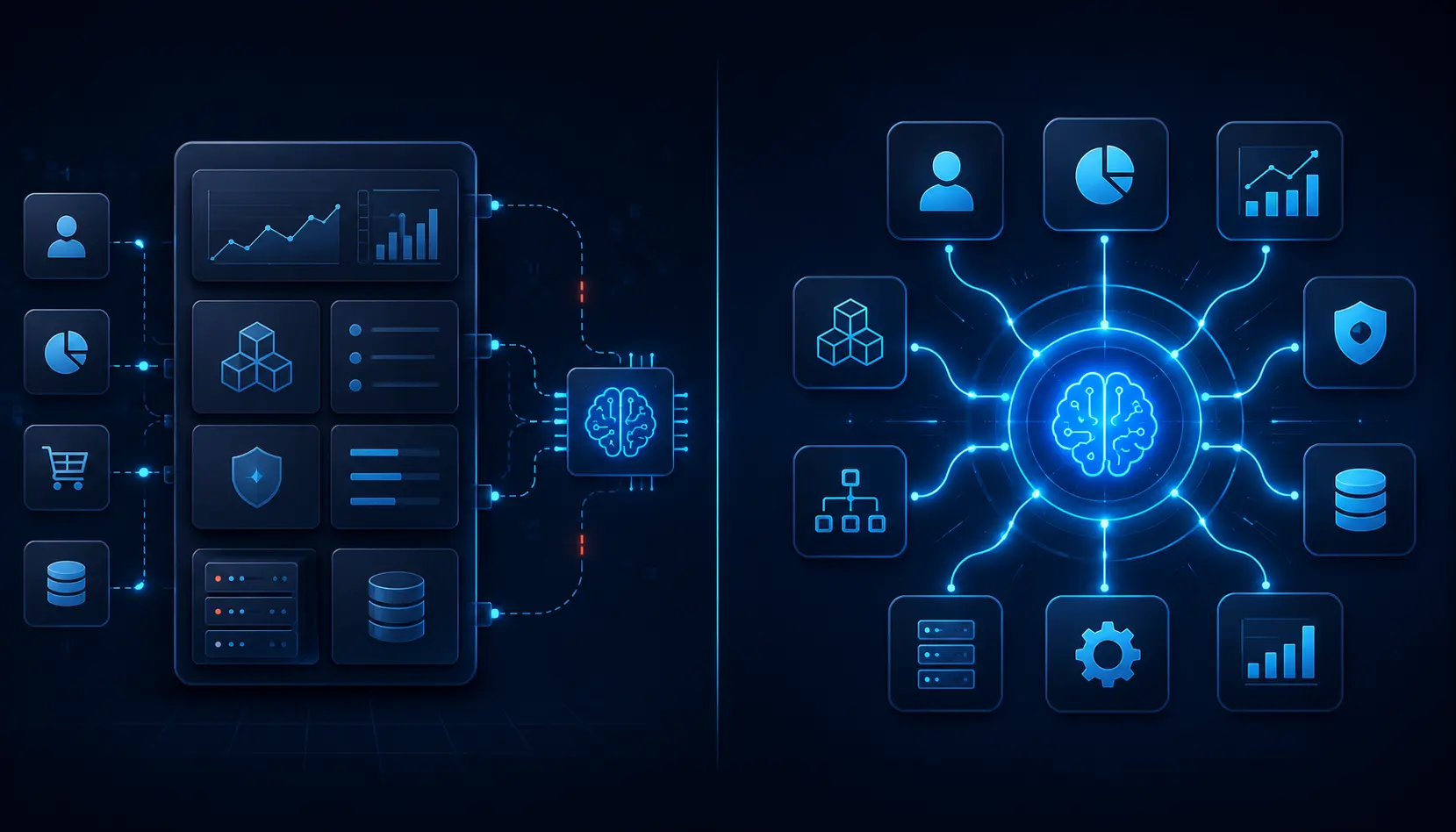
One that continuously gathers context, reasons across multiple sources, validates policies, orchestrates responses, documents investigations and determines when human judgement is genuinely required.

Not another dashboard. Not another source of alerts. A system responsible for moving investigations from signal to outcome.

What the Future Looks Like

The future security team will not necessarily be larger. Nor will it rely on dramatically different security products. Instead, it will operate differently.

  • Routine investigations will execute automatically within governed policies.
  • Human analysts will focus on exceptions rather than repetition.
  • Documentation will be created as part of the workflow rather than after the fact.
  • Every decision will be transparent, auditable and repeatable.

Security operations will become less dependent on individual effort and more dependent on operational intelligence.

A New Way to Think About Security Operations

Every mature technology industry eventually reaches a point where adding another tool produces diminishing returns.

The next leap forward comes from improving how the entire system operates. Cybersecurity is reaching that point now.

We believe the future belongs to organisations that treat security not as a collection of products, but as an operational system, one where intelligence, automation and human expertise work together seamlessly.

That belief is what led us to build Vokter.

Not as another security platform. But as the operating layer for modern security operations.


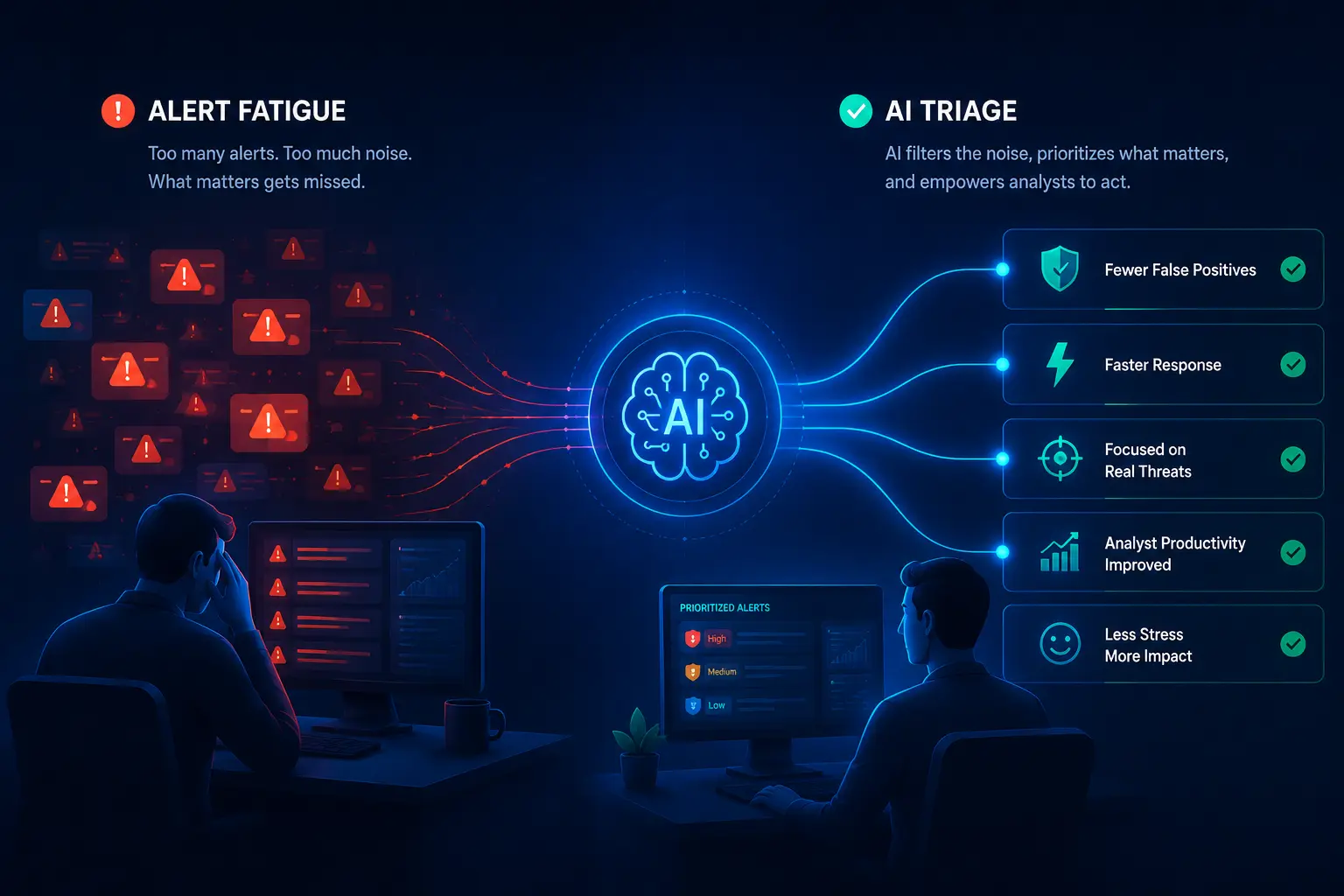
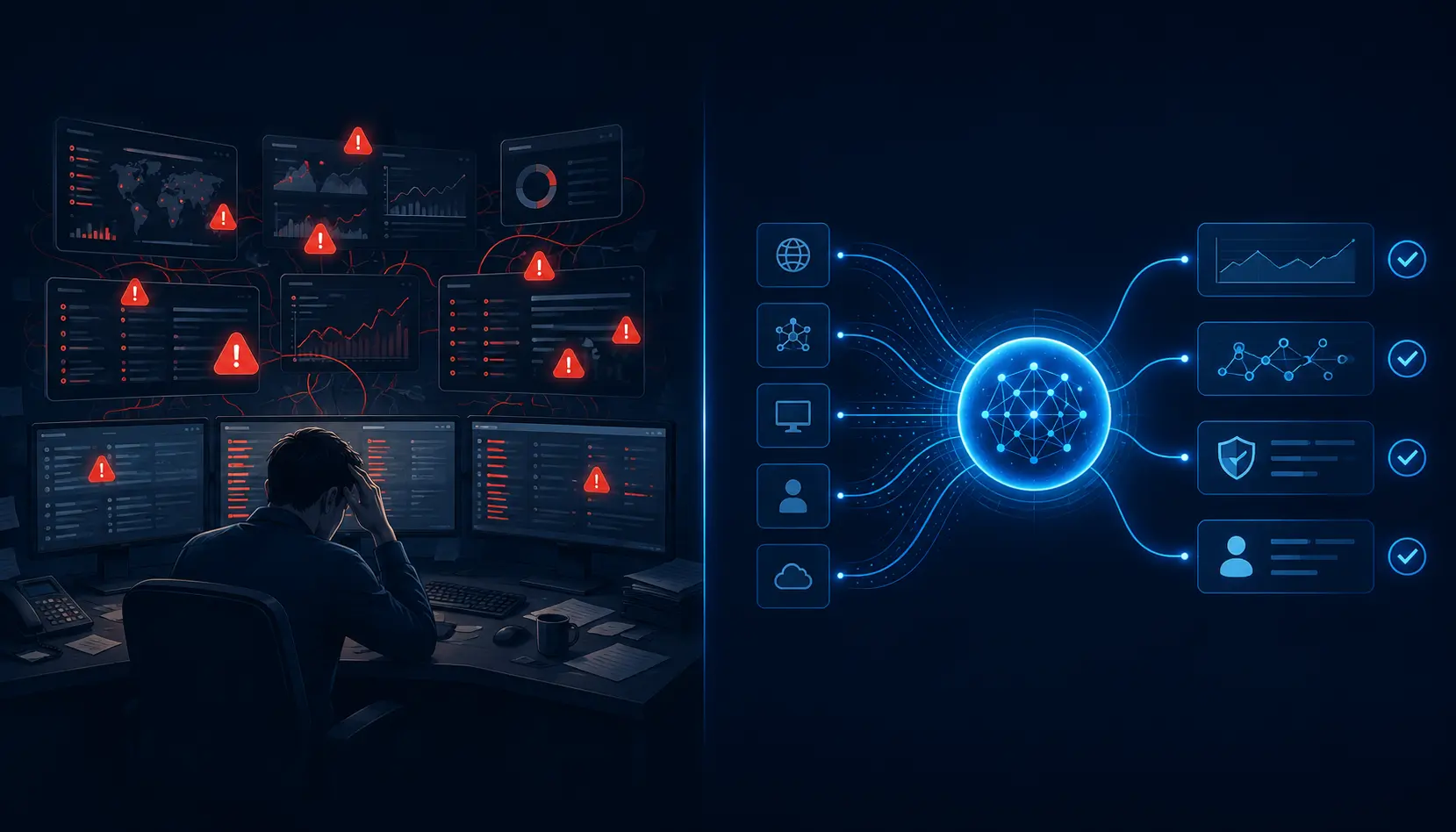
Alert fatigue is the desensitisation that sets in when security analysts face more alerts than any team can realistically investigate, causing genuine threats to be missed amid a flood of noise. AI alert triage solves this by automatically enriching, correlating, and scoring every alert, then closing benign events within defined guardrails and escalating only the incidents that warrant human attention. The result is a security operations centre (SOC) that spends its time on real risk rather than on repetitive, low-value review. This article explains what causes alert fatigue, what it costs, and how AI-driven triage changes the economics of detection and response.

What is alert fatigue and why does it happen?

Alert fatigue describes the cognitive and operational state in which analysts are exposed to such a high volume of security alerts that they can no longer respond to each one with full attention. Modern security stacks generate signals from endpoints, identity providers, firewalls, cloud workloads, email gateways, and SaaS applications. Each tool produces its own alerts, often with little shared context, and a large share of those alerts are benign or duplicate.

The underlying causes are structural rather than accidental:

  • Alert overload from tool sprawl. Every new detection source adds volume without reducing it, and overlapping rules raise the same event multiple times.
  • High false positive rates. Detection rules tuned for sensitivity inevitably flag legitimate behaviour, and conservative thresholds err towards raising alerts rather than suppressing them.
  • Missing context. A raw alert rarely tells the analyst whether the user is privileged, whether the asset is critical, or whether the activity matches a known pattern. Gathering that context manually is slow.
  • Round-the-clock demand. Threats do not respect business hours, so the queue never empties and the backlog compounds across shifts.

What does alert fatigue cost the SOC?

The cost of alert fatigue is paid in two currencies: missed threats and SOC analyst burnout. When every alert looks like the last one, the rare signal that matters is easily dismissed as another false positive. Attackers depend on exactly this dynamic, deliberately generating activity that blends into routine noise so that initial access or lateral movement passes unremarked.

The human cost is equally damaging. Repetitive, low-judgement work erodes morale, and SOC analyst burnout drives turnover in a discipline where experienced practitioners are already scarce. Each departure removes institutional knowledge and increases the load on those who remain, deepening the cycle. For security leaders, the consequences are concrete: slower mean time to respond, inconsistent handling between shifts, and a growing backlog that obscures the genuine incidents buried within it.

Regulatory expectations sharpen the stakes. Under the EU’s NIS2 Directive, adopted in 2022, and the Digital Operational Resilience Act (DORA), which applies from 17 January 2025, organisations must demonstrate timely detection, handling, and reporting of incidents. A queue too large to triage reliably is a compliance liability as much as a security one.

How does AI alert triage work?

AI alert triage applies machine reasoning to the first-line work that traditionally consumes analyst time. Rather than presenting raw alerts to a person, the system performs the investigative steps an experienced analyst would take, in seconds and at scale. The process moves through distinct stages.

Automatic enrichment

The moment an alert arrives, the system gathers the context needed to assess it: the identity and privilege level of any user involved, the criticality and ownership of the asset, recent related activity, threat intelligence on observed indicators, and the historical behaviour baseline for that entity. This enrichment removes the manual lookups that slow human triage.

Correlation

Individual alerts are linked across sources and time. A single suspicious sign-in may be unremarkable; the same sign-in followed by privilege escalation and unusual data access forms a coherent attack narrative. Correlation collapses many fragmented alerts into a smaller number of investigations, mapped where relevant to adversary techniques in frameworks such as MITRE ATT&CK.

Scoring and prioritisation

Each correlated case receives a severity and confidence score based on the enriched evidence. Scoring reflects business context, so an alert affecting a critical system or a privileged account is weighted accordingly. Analysts then see a ranked queue of what matters most, not an undifferentiated list.

Auto-closing benign alerts within guardrails

Where the evidence clearly indicates benign activity, the system resolves the alert automatically and records its reasoning for audit. As an industry trend, autonomous triage can resolve the large majority of benign, low-risk alerts in this way, which is where the relief from alert overload comes from. Crucially, auto-closure operates within explicit guardrails: defined confidence thresholds, scope limits, and exclusion rules ensure that anything ambiguous or high-impact is escalated rather than closed.

Escalation of what matters

Cases that exceed the confidence or severity thresholds are escalated with a complete, human-readable summary: what happened, why it was flagged, the supporting evidence, and a recommended response. Analysts begin their work already informed, rather than starting each investigation from zero.

Manual triage versus AI triage

The difference between conventional first-line triage and AI-driven triage is best seen stage by stage.

Triage stage Manual approach AI-driven approach
Enrichment Analyst queries multiple consoles by hand Context gathered automatically on arrival
Correlation Dependent on individual memory and tooling Alerts linked across sources and time consistently
Prioritisation First-in-first-out or ad hoc judgement Severity and confidence scored with business context
Benign alerts Each reviewed and closed manually Auto-closed within defined guardrails, fully logged
Consistency Varies by analyst and shift Uniform, repeatable, auditable
Analyst focus Spread thinly across the full queue Reserved for escalated, high-value incidents

Key takeaways

  • Alert fatigue arises from alert overload, high false positive rates, and missing context, and it leads directly to missed threats and SOC analyst burnout.
  • AI alert triage enriches, correlates, scores, and prioritises every alert automatically, replacing slow manual first-line work.
  • Benign, low-risk alerts are auto-closed within explicit guardrails, while only meaningful incidents are escalated to analysts.
  • Reducing false positives and noise improves mean time to respond and supports NIS2 and DORA expectations for timely detection.
  • The mechanism preserves human judgement for the cases that genuinely require it, addressing burnout and retention.

How AI triage reduces false positives and analyst burnout

Reducing false positives is not about suppressing detections; it is about resolving them correctly. By applying consistent enrichment and correlation to every alert, AI triage distinguishes routine behaviour from genuine threats with a uniformity no manually staffed queue can match. Noise is filtered out by evidence rather than ignored through exhaustion, which is the difference between a quieter queue and a safer one.

The effect on people is direct. When the bulk of repetitive review is handled automatically, analysts spend their time on investigation, threat hunting, and response, the work that drew them to the profession. That shift is the most durable answer to SOC analyst burnout, because it changes the nature of the role rather than merely adding capacity. For a broader view of how this fits into a modern operating model, see what an AI SOC is.

Where Vokter fits

Vokter delivers AI alert triage in two configurations suited to different operating models. Vokter Hybrid applies AI as the first line over your existing SIEM and SOAR, taking on enrichment, correlation, scoring, and the auto-closure of benign alerts within guardrails, so that your analysts are freed for higher-level L2 and L3 work. For organisations seeking to move beyond a traditional pipeline, Vokter Autonomous performs SIEM-less detection and triage end to end, escalating only what requires human decision. Both run within EU data sovereignty boundaries and apply explicit, auditable guardrails to every automated action. To discuss which configuration fits your environment, get in touch.

Conclusion

Alert fatigue is not a problem that more staff or stricter tuning can solve on their own, because the volume and inconsistency are structural. AI-driven triage addresses the root cause by performing first-line investigation automatically, resolving benign alerts within guardrails, and escalating only what matters. In doing so it reduces false positives, lowers mean time to respond, and returns skilled analysts to the work that requires human judgement.

Frequently asked questions

What is alert fatigue in a SOC?
Alert fatigue is the desensitisation that occurs when security analysts face more alerts than they can investigate. The constant volume, much of it false positives or duplicates, erodes attention and increases the risk that a genuine threat is dismissed as routine noise.
How does AI alert triage reduce false positives?
AI triage applies consistent enrichment and correlation to every alert, weighing evidence such as user privilege, asset criticality, and historical behaviour. This lets it distinguish benign activity from genuine threats uniformly and resolve false positives correctly rather than ignoring them.
Is it safe for AI to auto-close alerts?
Yes, when it operates within guardrails. Auto-closure applies only to alerts that meet defined confidence thresholds and scope rules, and every action is logged for audit. Anything ambiguous or high-impact is escalated to a human analyst rather than closed.
How does AI triage help with SOC analyst burnout?
By handling repetitive first-line review automatically, AI triage frees analysts to focus on investigation, threat hunting, and response. Changing the nature of the work, rather than simply adding capacity, is the most durable way to address burnout and improve retention.
What is the difference between Vokter Hybrid and Vokter Autonomous for triage?
Vokter Hybrid applies AI as the first line over your existing SIEM and SOAR, freeing analysts for L2 and L3 work. Vokter Autonomous performs SIEM-less detection and triage end to end, escalating only what needs a human decision. Both run within EU data sovereignty boundaries.

Every security vendor now says “AI”, which has made the word almost useless for telling products apart. The useful distinction is not hype versus substance plenty of the AI is real, but where the AI sits in the control flow. Answer that, and you can predict whether a platform will actually remove your Level 1 workload or merely give your analysts a faster way to do the same work.

Key takeaways

  • “AI-powered” keeps a human as the scheduler: the analyst decides what the AI works on next, so throughput stays bounded by human attention.
  • “AI-native” makes the system hold the loop: alerts drive the work, the AI runs triage-to-verdict, and humans are called as a subroutine for judgement.
  • Only the native model removes the L1 queue; retrofits hit a throughput ceiling because the queue still reaches humans.
  • Native is not autonomy-without-oversight done right it pairs machine-speed operations with guardrails, explainability and human-on-the-loop control.

It is not hype vs substance

It is tempting to read “AI-native” as the honest option and “AI-powered” as marketing. That is the wrong frame. An AI copilot that summarises a case or drafts a query is genuinely useful and genuinely AI. The difference that matters is structural, and it is easy to miss precisely because both products demo well: one helps a person do a task faster, the other changes who is doing the task at all.

Where the AI sits in the control flow

Think about the unit of work. In an AI-powered tool, the unit is still “an analyst opens a ticket and invokes the AI.” The human is the scheduler nothing happens until a person decides to look. Total throughput is therefore capped by how many tickets humans can attend to, no matter how fast each one now goes. In an AI-native platform, the unit of work is “an alert arrives and the system runs the loop”: ingest, enrich, correlate, reach a verdict, resolve or contain the clear cases, and escalate the rest. The human is not the scheduler; the human is a subroutine the system calls when judgement is required. That inversion is the whole game.

It also changes what “context” means. An assistant is effectively stateless it answers the prompt in front of it. A native system maintains investigative state across signals and over time, so three related weak signals become one strong case instead of three separately-dismissed alerts.

The 3am test

Here is a single question that separates the two in practice: what happens at 3am with no analyst logged in? An AI-powered tool stalls the AI is a capability waiting to be invoked, and there is no one to invoke it, so alerts queue until morning. An AI-native platform runs the same at 3am as at 3pm, because the alerts themselves drive the work. If a vendor’s “autonomy” depends on an analyst being present to press go, it is powered, whatever the datasheet says.

Why retrofits plateau

This is why bolting AI onto a legacy SIEM or a human-heavy MDR produces diminishing returns. The workflow underneath was designed around a human queue; adding AI shortens the time spent per ticket but does nothing about the number of tickets that still land in front of a person. You get a real but bounded improvement and then a ceiling — a practical echo of Amdahl’s law, where speeding up one stage cannot fix a pipeline still gated by an unautomated one. To remove the ceiling you have to remove the queue, and that is an architectural decision made at the foundation, not a feature added later. We walk through the broader shift in AI SOC vs traditional SOC.

AI-powered vs AI-native, side by side

Dimension AI-powered AI-native
Unit of work Analyst opens ticket, invokes AI Alert arrives, system runs the loop
Who schedules the work The human The system; human is called for judgement
Throughput ceiling Bounded by analyst attention Bounded by compute, not headcount
State across signals Stateless per prompt Persistent case context
At 3am, no analyst Queues until morning Runs unchanged
Effect on L1 queue Cleared faster Largely removed
Right role Analyst accelerator Operating layer

The honest risks of going native

Native is not a free lunch, and anyone who sells it as one is worth distrusting. Handing the loop to a system raises real questions: how are its verdicts explained and audited; can every automated action be reversed; what stops it acting on a bad correlation; how is model drift detected; and where exactly is the human sign-off for disruptive steps? The answer is not “trust the AI” it is guardrails, reversibility, human-on-the-loop control for consequential actions, and full auditability of decisions. Handled well, governance is what makes machine-speed operations trustworthy rather than what slows them down; it is also increasingly a compliance expectation under the EU AI Act’s transparency obligations. A native platform that cannot explain a verdict is not more advanced it is less safe.

How to evaluate a claim

Cut through the language with control-flow questions: What runs with no human in the loop? Does an escalation arrive as a finished investigation or a forwarded alert? Is case state maintained across signals, or is each prompt fresh? Can I sample and audit auto-resolved cases? Can every automated action be reversed, and who signs off on the disruptive ones? Our provider evaluation guide expands these into a full checklist.

AI-native operations with Vokter

Vokter is AI-native by construction: alerts drive the loop, the system runs triage-to-verdict and safe first-line response, and your team is called in for the decisions that need judgement with guardrails, reversible actions and auditable verdicts throughout. Deploy it standalone with Vokter Autonomous, over your existing stack with Vokter Hybrid, or with named Nordic analysts and an SLA via Vokter Guardian all operated within EU jurisdiction. Put it to the 3am test on your own alerts.

Frequently asked questions

What is the real difference between AI-powered and AI-native security?
The real difference is where the AI sits in the control flow. In an AI-powered tool the analyst invokes the AI, so throughput stays bounded by human attention. In an AI-native platform the system runs triage-to-verdict itself and calls a human only for escalations. One automates tasks; the other automates the operation.
Does AI-native mean there is no human oversight?
No, and any vendor implying that should worry you. AI-native means the AI runs the repetitive loop while humans stay on the loop for judgement, sign-off on disruptive actions, and review. Autonomy without guardrails, explainability and reversibility is a liability, not a feature.
Can a legacy SIEM or MDR become AI-native by adding AI features?
Rarely, because the workflow underneath still assumes a human queue. Adding AI reduces the time per ticket but not the number of tickets reaching a human, so you hit a ceiling you have sped up the analyst, not removed the queue. Becoming native is an architectural change, not a feature.
Are AI-powered security tools worth using?
Yes. AI assistants, summarisers and copilots genuinely help analysts and are worth having. They just do not change the operating model or lift the throughput ceiling, so they improve human-run operations rather than replacing them.
What is the 3am test for AI security platforms?
Ask what runs with no analyst logged in. If triage, correlation, investigation and first-line response happen automatically and produce audited verdicts, the platform is AI-native. If the AI only acts when an analyst invokes it, it is AI-powered whatever the datasheet says. The test cuts through most marketing in one question.

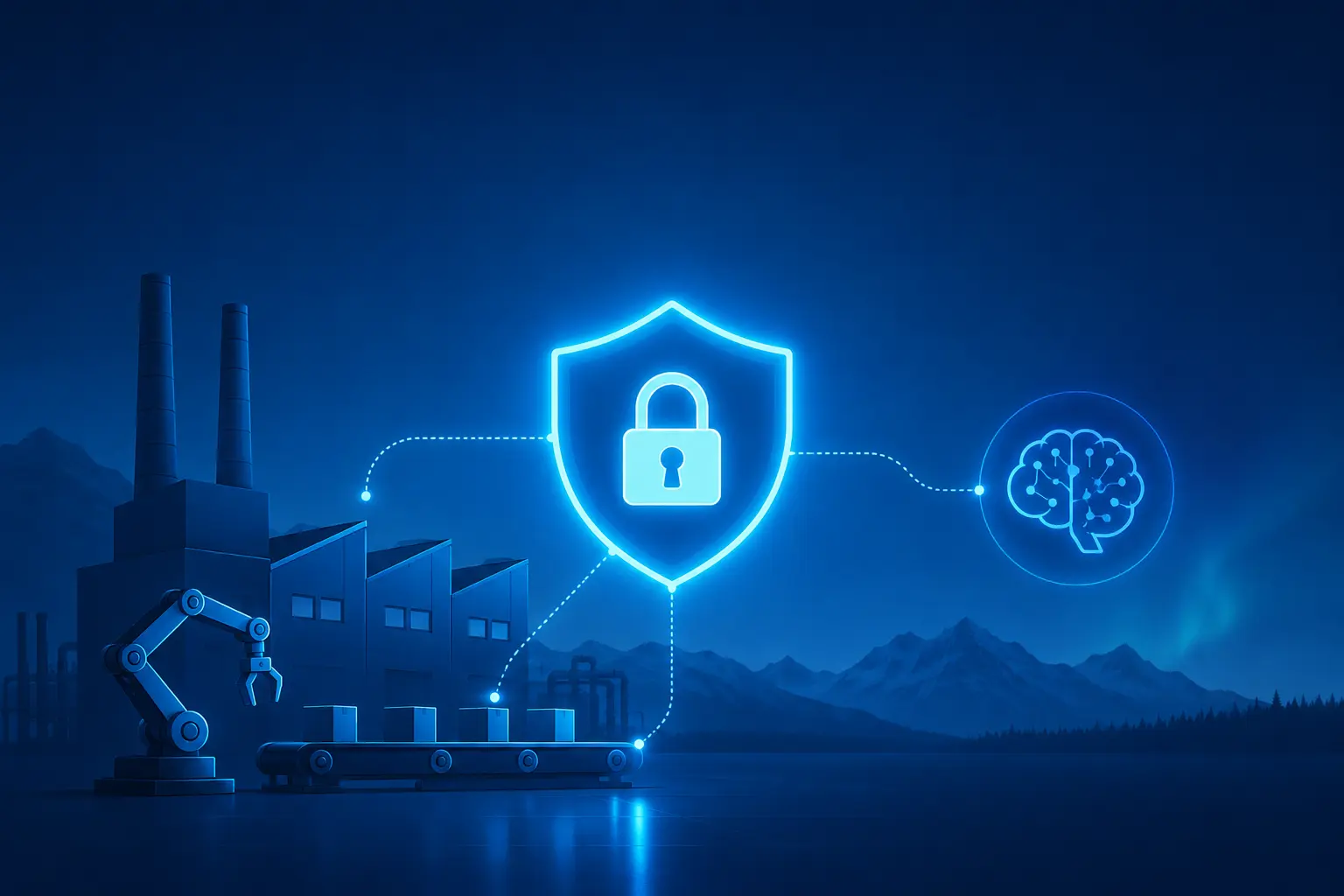
OT security in the Nordics has become a board-level concern as the region’s manufacturers, energy operators, and industrial firms connect once-isolated plant systems to corporate networks and the internet. Operational technology (OT) controls physical processes, so a security incident can halt production or threaten safety, not just leak data. An AI SOC helps Nordic manufacturers by providing continuous, around-the-clock monitoring of both IT and OT environments and responding to threats in a safe, bounded, reversible way that respects the sensitivity of industrial control systems.

This article examines the OT threat landscape, why IT/OT convergence raises risk, where traditional IT SOCs struggle with industrial environments, what effective OT monitoring requires, the regulatory pressure facing Nordic industry, and how an AI SOC delivers coverage suited to safety-critical operations.

Key takeaways

  • OT security in the Nordics matters because industrial control systems govern physical processes, so incidents can disrupt production or affect safety, not merely compromise information.
  • IT/OT convergence improves efficiency but expands the attack surface, exposing legacy control systems that were never designed to be networked or patched frequently.
  • Traditional IT SOCs often struggle with OT because they lack protocol awareness, asset context, and an appreciation of availability and safety constraints.
  • OT monitoring favours passive, non-intrusive techniques, asset discovery, and a clear view of the Purdue model levels rather than aggressive active scanning.
  • NIS2 brings many manufacturing and critical entities into scope as essential or important entities, raising expectations for monitoring and incident reporting.
  • An AI SOC provides continuous coverage with bounded, verified, reversible response, with expert oversight available through Vokter Guardian for sensitive environments.

Why does OT security in the Nordics matter now?

The Nordic region has a deep industrial base: pulp and paper, mining and metals, automotive and machinery, chemicals, food production, shipping, and a large energy sector spanning hydro, nuclear, wind, and oil and gas. These sectors depend on operational technology, the industrial control systems, programmable logic controllers, and supervisory systems that run physical processes on the factory floor and across distributed sites.

For most of their history, these systems were air-gapped or run on proprietary networks, which limited exposure. That isolation is eroding. Digitalisation, remote maintenance, predictive analytics, and tighter integration between the plant floor and enterprise IT have connected OT to networks that attackers can reach. The consequence is that OT security Nordics teams now face threats that were once confined to IT, but with far higher stakes: a successful intrusion can stop a production line, damage equipment, or, in the worst case, create a safety hazard.

The OT threat landscape for manufacturing cybersecurity

Manufacturing cybersecurity has distinctive risks. The threats are not only the familiar ransomware and intrusion campaigns that target enterprise IT, but also attacks that exploit the specific weaknesses of industrial environments.

  • Ransomware crossing into production. Attacks that begin in IT can spread to systems that manage or interface with the plant floor, forcing operators to halt production as a precaution even when OT itself is not directly encrypted.
  • Legacy and unpatched systems. Control systems often run for decades on operating systems and firmware that can no longer be patched easily, or at all, without risking process disruption.
  • Remote access exposure. Vendor and engineer remote access, necessary for maintenance, can become an entry point if it is not tightly monitored and controlled.
  • Insider and supply-chain risk. Compromised maintenance laptops, removable media, and third-party integrations can introduce threats that bypass perimeter defences.
  • Living-off-the-land techniques. Attackers increasingly use legitimate tools and protocols, which makes malicious activity harder to distinguish from normal engineering work.

What unifies these risks is consequence. In IT, the primary concern is confidentiality and integrity of data. In OT, availability and safety come first, because the systems govern physical reality.

IT/OT convergence: efficiency that expands the attack surface

IT/OT convergence describes the merging of corporate information technology with operational technology, so that plant data flows into enterprise analytics and business systems can reach into production. It delivers real benefits: better visibility of operations, predictive maintenance, and faster decision-making. It also expands the attack surface considerably.

Convergence means that a foothold in IT can become a path into OT, and that systems never designed for internet exposure are now reachable through connected networks. Many control systems lack basic security controls such as authentication or encryption, because they were built for trusted, isolated environments. When those systems are bridged to IT, their weaknesses become enterprise risks. Effective security therefore requires monitoring that spans both domains and understands the boundaries between them, rather than treating IT and OT as separate, unrelated problems.

Why traditional IT SOCs struggle with industrial control systems security

A conventional IT SOC is built around enterprise telemetry: endpoints, servers, identity, cloud, and corporate network traffic. Pointed at an industrial environment, it frequently falls short for several reasons related to industrial control systems security.

  • Protocol blindness. OT uses specialised protocols that general-purpose IT tooling may not parse, so malicious or anomalous control-system traffic goes unseen.
  • Lack of asset context. Without an accurate inventory of controllers, sensors, and engineering stations, alerts lack the context needed to judge severity and impact.
  • Wrong priorities. IT response often defaults to isolating or shutting down affected systems. In OT, an abrupt shutdown can itself cause a safety or production incident, so that reflex can do more harm than the threat.
  • Intrusive scanning. Active vulnerability scans that are routine in IT can disrupt fragile control devices, so they are often unsafe in production OT.
  • Alert overload without tuning. Industrial environments generate distinctive traffic patterns; an IT SOC that is not tuned for them produces noise that buries genuine threats.

The table below summarises the core differences security leaders need to account for.

Dimension Traditional IT security OT security
Primary priority Confidentiality and integrity of data Availability and safety of physical processes
Acceptable downtime Patching and reboots routinely scheduled Downtime costly or hazardous; change tightly controlled
System lifespan Years; refreshed regularly Decades; legacy systems common
Patching Frequent, often automated Infrequent; may be impossible without disruption
Monitoring approach Active scanning acceptable Passive, non-intrusive monitoring preferred
Protocols Standard IT protocols Specialised industrial protocols
Response to threat Isolate or shut down quickly Bounded, reversible action; avoid unsafe shutdown

What effective OT monitoring requires

Monitoring an OT environment well means respecting its constraints. The starting point is visibility: a reliable, continuously updated inventory of assets and the connections between them. Because active scanning can be unsafe, OT monitoring favours passive, non-intrusive techniques that observe network traffic without injecting packets into fragile devices. This allows the SOC to learn what normal looks like and to flag deviations without touching the process itself.

A useful frame is the Purdue model, which describes industrial architectures in layered levels, from physical process and field devices at the lowest levels, through control and supervisory systems, up to manufacturing operations and, at the top, enterprise IT. Effective monitoring pays particular attention to the boundary between the enterprise and operations zones, where IT and OT meet, because that is where convergence-driven threats most often cross. Detection content should be aware of these levels, so that an alert can be interpreted in terms of where it sits and what it could affect.

Above all, OT monitoring must connect anomalies to operational meaning. An unexpected command to a controller, an unfamiliar device on a control network, or a deviation in expected traffic patterns matters because of what it could do physically, and a capable OT SOC treats it accordingly.

Regulatory pressure: NIS2 and the Nordic industrial base

Regulation is sharpening expectations for OT security across Nordic industry. The NIS2 directive, adopted in 2022, brings many manufacturing and critical-infrastructure entities into scope as essential or important entities, with obligations covering risk management, incident detection and handling, supply-chain security, and structured incident notification to national authorities. Sectors such as energy, water, food production, and the manufacture of certain products are squarely within its reach, which means that monitoring and reporting can no longer be treated as optional for industrial operators.

Because NIS2 is a directive, member states transpose it into national law, and the precise classifications and reporting timeframes vary by country, so Nordic operators should confirm their obligations under each relevant national regime. For organisations with financial-sector ties, DORA, which applies from 17 January 2025, adds further operational-resilience and reporting expectations. A practical way to assess readiness is to work through a structured NIS2 SOC checklist and map each obligation to your current monitoring and response capability.

How an AI SOC delivers continuous, safe OT coverage

An AI SOC is well suited to the demands of industrial environments because it combines continuous coverage with response that is deliberately bounded and reversible. The hardest part of OT security is being everywhere, all the time, without taking actions that could disrupt a live process. AI-driven monitoring watches IT and OT telemetry continuously, triages alerts to separate genuine threats from operational noise, and reconstructs the context of an event so that severity and potential physical impact can be judged quickly. That continuous, automated triage is what makes round-the-clock coverage realistic without an unsustainable analyst rota.

Crucially for OT, every action an AI SOC takes is designed to be safe. At Nordic SOC, all automated response is bounded, verified, and reversible, so the system does not reflexively shut down or isolate a control system in a way that could itself cause harm. Safe autonomous containment favours measured, reversible steps and clear escalation over blunt intervention, which is exactly the posture sensitive industrial environments require.

For Nordic manufacturers, two Vokter modes fit the OT context particularly well. Vokter Guardian pairs AI, which handles the large majority of routine detection and triage, with named Nordic analysts providing 24/7 oversight, threat hunting, forensics, and a contractual SLA. That expert oversight is valuable where the consequences of error are physical and where containment decisions need human judgement. Where an organisation has limited existing tooling and wants rapid coverage, Vokter Autonomous provides AI-driven monitoring and response without requiring a SIEM, drawing on EDR, XDR, or Windows Event Collector telemetry. As an independent, EU-sovereign provider holding data in EU cloud regions, Nordic SOC keeps monitoring and evidence within European jurisdiction, which matters for both regulatory alignment and the protection of sensitive operational data.

If you would like to discuss how continuous, safe OT monitoring would fit your environment, contact Nordic SOC.

Conclusion

OT security has moved from a peripheral concern to a central one for Nordic manufacturers, as connected operations expose systems that were never built to be networked and as regulation raises the bar for monitoring and reporting. The defining requirement is coverage that is both continuous and safe: always watching, but never acting in a way that could disrupt a physical process. An AI SOC, with bounded and reversible response and expert oversight where it is needed, gives industrial operators a realistic way to meet that requirement across converged IT and OT environments.

Frequently asked questions

Can an AI SOC safely monitor OT environments?
Yes, provided its response actions are bounded and reversible. An AI SOC continuously monitors IT and OT telemetry and triages alerts automatically, but in industrial environments it must avoid intrusive scanning or abrupt shutdowns that could disrupt physical processes. Safe OT coverage pairs passive monitoring with measured, verified containment and human oversight for high-consequence decisions.
What is the difference between IT security and OT security?
IT security protects the confidentiality and integrity of data, while OT security protects the availability and safety of physical processes such as production lines. OT systems run for decades, are difficult to patch, and use specialised industrial protocols, so OT security favors passive monitoring and carefully controlled change rather than the active scanning routine in IT.
What is IT/OT convergence and why does it raise risk?
IT/OT convergence is the merging of corporate information technology with operational technology, so plant data flows into enterprise systems and business systems can reach into production. It improves visibility and efficiency, but it expands the attack surface: a foothold in IT can become a path into OT, and control systems that lack authentication or encryption become reachable from connected networks.
Why do traditional IT SOCs struggle with OT environments?
OT monitoring favours passive, non-intrusive techniques that observe network traffic without injecting packets into fragile devices, combined with accurate asset discovery and awareness of the Purdue model levels. Attention focuses on the boundary between enterprise IT and operations, where convergence-driven threats most often cross, so anomalies can be interpreted in terms of their potential physical impact.
Does NIS2 apply to manufacturing in the Nordics?
Yes. NIS2, adopted in 2022, brings many manufacturing and critical-infrastructure entities into scope as essential or important entities, with obligations for risk management, incident detection and handling, supply-chain security, and structured incident notification. Because NIS2 is a directive, member states transpose it into national law, so Nordic operators should confirm their precise obligations under each relevant national regime.

An AI SOC and a traditional SOC pursue the same goal — detecting and responding to threats — but they differ in how the work is done. In the AI SOC vs traditional SOC comparison, the core change is who performs the repetitive analytical work: a traditional SOC relies on human analysts to triage, enrich and investigate alerts, whereas an AI SOC uses machine reasoning to triage and decide at scale, escalating only what genuinely needs human judgement. The result is faster decisions, consistent quality and a lower mean time to respond — without the staffing burden that constrains conventional operations.

What is a traditional SOC?

A traditional security operations centre is built around people, process and a central log platform, usually a SIEM. Telemetry from endpoints, networks, identity systems and cloud services flows into the SIEM, where correlation rules generate alerts. Tiered analysts then work those alerts:

  • L1 analysts triage incoming alerts, dismiss noise and escalate the rest.
  • L2 analysts investigate escalations, pivot across data sources and confirm scope.
  • L3 analysts and threat hunters handle complex incidents, forensics and proactive hunting.

This model is well understood and effective when adequately staffed. Its difficulties are structural rather than a failure of effort.

Traditional SOC limitations

The most persistent traditional SOC limitations stem from alert volume outpacing human capacity:

  • Alert fatigue: analysts face far more alerts than they can examine carefully, so genuine threats can be missed amid false positives.
  • Inconsistent triage: decisions vary by analyst, shift and workload, making quality difficult to guarantee.
  • Slow investigation: manual pivoting across consoles extends dwell time and lengthens the mean time to respond.
  • Staffing pressure: 24/7 cover requires night shifts and a deep bench, and skilled analysts are scarce and costly to retain.
  • Cost that scales with volume: more data and more alerts demand more people, so spend rises in step with the environment.

How an AI SOC differs from a traditional SOC

An AI SOC keeps the same objectives but changes the operating model. Instead of routing every alert to a person, an AI layer performs the first pass: it correlates signals, enriches them with context, scores severity and, where appropriate, takes or recommends containment action. SOC automation handles the high-volume, repeatable analysis continuously, while humans concentrate on the decisions that require experience and accountability.

Three capabilities define the difference:

  1. Automated alert triage — every alert is assessed and scored, not sampled, removing the backlog that drives alert fatigue.
  2. Machine-speed investigation — enrichment and correlation across data sources happen in seconds, mapped to recognised frameworks such as MITRE ATT&CK.
  3. Guided or autonomous response — the system can isolate a host, disable an account or raise a ticket within defined guardrails, compressing the mean time to respond.

For a fuller definition of the model, see our explainer on what an AI SOC is and how it works.

AI SOC vs traditional SOC: side-by-side comparison

The table below compares the two models across the dimensions that matter most to security leaders.

Dimension Traditional SOC AI SOC
Detection Rule and correlation driven; tuning is manual and ongoing Rule and behaviour driven; context applied automatically at scale
Alert triage Human L1 triage; sampling under high volume Every alert triaged and scored automatically
Investigation Manual pivoting across consoles; time-intensive Automated enrichment and correlation in seconds
Response Manual or scripted; depends on analyst availability Guided or autonomous within guardrails; consistent
Staffing Tiered teams plus night shifts for 24/7 cover Lean team; AI handles volume, humans handle judgement
Cost drivers Headcount scales with alert and data volume Largely fixed AI capacity; headcount decoupled from volume
Scalability Adding capacity means hiring and onboarding Scales with data without proportional hiring
Consistency Varies by analyst, shift and workload Uniform logic applied to every alert
Compliance evidence Manual notes; coverage gaps possible Automatic, time-stamped audit trail of every decision

Detection and alert triage

Both models detect through rules and correlation, but they diverge at triage. A traditional SOC depends on analysts to judge each alert, which works until volume exceeds capacity. An AI SOC applies the same enrichment and scoring logic to every alert, so nothing is skipped because the queue is long. Consistent triage is the foundation for everything downstream; our deeper treatment of AI alert triage and alert fatigue explains how this is achieved in practice.

Investigation and response

Investigation is where time is won or lost. Manual investigation requires an analyst to gather context from multiple systems before deciding. An AI SOC assembles that context automatically and, where policy permits, acts on it — containing a threat or escalating with a complete case file attached. This is the principal lever on mean time to respond.

Staffing, cost and scalability

In a traditional SOC, capacity is a function of headcount, so cost and resilience are tied to recruitment in a tight labour market. An AI SOC decouples capacity from headcount: the AI absorbs volume, and the human team is sized for oversight and complex cases rather than for raw throughput. This makes 24/7 coverage achievable without expanding night-shift rotas.

Compliance and auditability

Regulatory expectations in the EU continue to rise. DORA has applied to in-scope financial entities since 17 January 2025, NIS2 was adopted in 2022 and is being transposed across member states, and EU AI Act transparency obligations apply from August 2026. Each demands demonstrable detection, response and reporting. An AI SOC produces a consistent, time-stamped record of every alert and decision, which simplifies evidence-gathering compared with reconstructing activity from manual notes.

Key takeaways

  • A traditional SOC depends on human analysts for triage and investigation; an AI SOC uses machine reasoning to do that work at scale and escalate only what needs judgement.
  • The clearest gains are in alert triage, investigation speed and a lower mean time to respond, because every alert is assessed rather than sampled.
  • SOC automation decouples cost and capacity from headcount, making 24/7 coverage achievable without large teams or night shifts.
  • An AI SOC strengthens compliance through a consistent, time-stamped audit trail aligned to DORA, NIS2 and the EU AI Act.
  • An AI SOC is not a single product but an operating model delivered through deployment modes suited to each organisation.

How an AI SOC is delivered in practice

An AI SOC is an operating model, not a one-size deployment. Vokter delivers it in three modes so it fits different starting points:

  • Autonomous — a SIEM-less SOC for organisations with no security team or central platform. The AI triages, scores and contains using existing endpoint telemetry, issuing a daily report and auto-tickets. See Vokter Autonomous.
  • Hybrid — the AI runs L1 on your existing SIEM or SOAR, enriching, deciding and writing back so your analysts move up to L2 and L3 work. See Vokter Hybrid.
  • Guardian — AI plus named Nordic analysts on a 24/7 basis, with the AI handling the bulk of alerts and humans owning critical cases, threat hunting and forensics under SLA.

Each mode preserves EU data sovereignty and keeps a human accountable for high-impact outcomes. To discuss which fits your environment, get in touch with Nordic SOC.

Conclusion

The shift from a traditional SOC to an AI SOC is not about replacing analysts but about reallocating their attention. Machines take the high-volume, repeatable work — triage, enrichment and routine response — while skilled people focus on the decisions and investigations that genuinely require them. For most organisations the practical effect is faster, more consistent detection and response, achieved without scaling a team in line with alert volume.

Frequently asked questions

What is the difference between an AI SOC and a traditional SOC?
A traditional SOC relies on human analysts to triage, enrich and investigate every alert, while an AI SOC uses machine reasoning to triage and decide at scale, escalating only cases that need human judgement. The practical effect is faster, more consistent decisions and a lower mean time to respond.
Does an AI SOC replace security analysts?
No. An AI SOC reallocates analyst attention rather than removing it. The AI handles high-volume, repeatable work such as triage and enrichment, while skilled analysts focus on complex investigations, threat hunting and accountability for high-impact decisions.
Is an AI SOC cheaper than a traditional SOC?
Generally, yes at scale, because cost is decoupled from alert volume. A traditional SOC must add analysts as data and alerts grow, so spend rises with the environment. An AI SOC absorbs volume with largely fixed AI capacity and a lean human team sized for oversight, making 24/7 coverage achievable without night-shift headcount.
How does an AI SOC reduce mean time to respond?
It assesses and scores every alert automatically, assembles investigation context across data sources in seconds, and can contain a threat or escalate with a complete case file within defined guardrails. Removing manual triage and pivoting steps compresses the time from detection to response.
Is an AI SOC suitable for organisations without a SIEM or security team?
Yes. A SIEM-less deployment such as Vokter Autonomous uses existing endpoint telemetry to triage, score and contain threats, issuing a daily report and auto-tickets, so organisations without a central platform or team can still run effective operations.
How does an AI SOC help with EU compliance?
An AI SOC produces a consistent, time-stamped audit trail of every alert and decision, which supports evidence requirements under frameworks such as DORA, NIS2 and the EU AI Act, and is simpler than reconstructing activity from manual analyst notes.

Most conversations about “automating SOC” start in the wrong place with the technology. Start instead with the job. The Level 1 (L1) analyst runs a specific, well-defined decision procedure hundreds of times a shift. Understanding that procedure and the conditions under which humans are forced to run it explains exactly why it is the right thing to automate first, and why automating it is less about intelligence than about removing the conditions that make good analysts perform badly.

Key takeaways

  • L1 is a decision procedure given an alert, reach a verdict (true or false positive) and decide whether it warrants escalation.
  • Humans do not fail at L1 because they lack skill; they fail because volume, base-rate neglect, alarm habituation and shift handovers degrade judgement predictably.
  • Automation wins by removing those conditions running the same enrichment and correlation in seconds, statelessly consistent, around the clock not by being “smarter” than an analyst.
  • The design that matters escalates on uncertainty; a high auto-close rate is a vanity metric, escalation precision and recall are the real ones.

What L1 actually decides

Strip away the tooling and an L1 analyst answers two questions for every alert: is this a true positive? and does it warrant escalation? Everything else opening the ticket, pivoting between consoles, copying an IP into a threat-intel lookup, checking whether a process is a known admin script is the evidence-gathering that supports those two answers. The valuable output of L1 is not a forwarded alert; it is a verdict with evidence. An escalation that arrives at L2 as “EDR fired on host X, take a look” has done none of the work. One that arrives as “credential theft attempt on a finance workstation, here is the process tree, the identity’s anomalous sign-in ten minutes earlier, and why this is not the backup job that usually triggers this rule” has done all of it.

This matters because it reframes the automation question. You are not asking a machine to be creative. You are asking it to execute a known procedure reliably at a volume and cadence humans cannot sustain.

Why good analysts still miss things

The uncomfortable part: the misses are not a training problem. They are structural, and they are predictable.

Base-rate neglect under a flood of false positives

When the overwhelming majority of alerts are benign, the human prior quietly shifts toward “this is nothing too.” That is rational as a shortcut and dangerous as a habit; it is precisely how the one real alert in a thousand gets a cursory glance and a close.

Alarm habituation

The same noisy rule firing forty times a day trains the analyst to dismiss it on sight. Attackers who understand this deliberately operate inside the noise, using techniques that resemble routine administrative activity.

Context-switching cost

Each alert lives across several consoles EDR, identity provider, email security, the SIEM. Reassembling context for every ticket is expensive, and under queue pressure the reassembly gets shorter, which is another word for shallower.

Lost state at handover

An investigation half-formed at the end of a shift rarely survives the handover intact. The night analyst inherits a queue, not a train of thought, and the thread is quietly dropped.

None of these are solved by hiring a better analyst; a better analyst degrades the same way, just later in the shift. This is the case for automation that most vendor material skips: the argument is not that AI out-thinks humans, but that it does not habituate, does not neglect base rates, does not lose state at 3am, and does not get shallower under load.

The anatomy of a single triage

Make it concrete. An EDR alert fires: WINWORD.EXE has spawned rundll32.exe, which has made an outbound connection. In isolation this is a medium-severity alert that could be a macro-based loader or could be a legitimate add-in. A competent triage runs roughly like this:

  • Enrich: pull the full process tree, the signing status of the invoked DLL, the destination reputation, the user, and the asset’s role. Is this a developer’s machine or a finance controller’s?
  • Correlate: did anything else happen around this host or identity in the same window a new inbox rule, a token grant, an impossible-travel sign-in, another endpoint firing the same pattern?
  • Compare to baseline: is this the known monthly reporting macro that always trips this rule, or is it new for this user?
  • Verdict: true or false positive, with the evidence attached, and a decision to auto-resolve, contain, or escalate.

Every step is mechanical. It requires access and diligence, not insight. That is the signature of work that should be automated and note that the single most decisive step, correlation, is exactly the step a human under load is most likely to skip, because it means leaving the current console.

What automation actually changes and what it doesn’t

An AI-native SOC runs that entire procedure on every alert, in seconds, with identical rigour on the first alert of the day and the four-hundredth. It ingests and normalises the alert, reconstructs the process and identity context, correlates against every other signal in the window, compares to baseline, and reaches a verdict with evidence. Clear low-risk cases resolve automatically; clear malicious ones can be contained within guardrails; everything ambiguous escalates to a human, with the investigation already done.

What it does not change is who owns judgement. It does not invent intent, it does not overrule policy, and critically it does not pretend to certainty it lacks. The correct design treats uncertainty as an output: a novel technique or a genuinely ambiguous case becomes an escalation, not a confident auto close. A system tuned instead to maximise its auto-close rate is optimising the one number that can hide missed detections, and that is the failure mode to interrogate in any vendor demo.

Manual L1 vs automated L1

Dimension Human-run L1 Automated L1 (AI-native)
Time per alert Minutes to hours; grows under load Seconds; constant under load
Consistency Degrades across a shift Identical on alert 1 and alert 400
Correlation across tools Skipped first under pressure Performed on every case by default
Coverage Requires a night-shift rota Continuous, no rota
Output of an escalation Often a forwarded alert A verdict with assembled evidence
Handover state Lost between shifts Persistent case context
Failure mode Habituation, base-rate neglect Misclassifying novel TTPs mitigated by escalating on uncertainty

The metrics that matter (and the ones that mislead)

If you automate L1, measure it honestly. Auto-close rate is a vanity metric you can make it say anything, and a high number can mean you are silently burying real incidents. The metrics that actually reflect quality are escalation precision (of what you escalate, how much is real) and escalation recall (of what was real, how much you escalated). Alongside those, track mean time to detect and respond, the false-positive close rate audited against a sampled ground truth, and dwell time. A credible provider will let you sample and re-review auto-closed cases; if a verdict cannot be explained and audited, it cannot be trusted, which is also why explainability is becoming a procurement requirement under the EU AI Act.

What stays human

Automating L1 concentrates human attention rather than removing it. High-severity incidents, business-context decisions (“yes, that unusual transfer was the acquisition, stand down”), policy exceptions, threat hunting, and any disruptive action requiring sign-off remain with people now working from finished investigations instead of raw queues. This is the same human-on-the-loop model that keeps automated response safe: pre-approved, reversible actions, and escalation whenever the system is unsure. The analyst’s day shifts from clearing tickets to making the calls that genuinely need a human.

Automating L1 with Vokter

Vokter is Nordic SOC’s AI-native platform built to run this exact procedure as your first line — enrich, correlate, reach a verdict with evidence, resolve or safely contain the clear cases, and escalate the rest with the investigation attached. Run it as your whole first line with Vokter Autonomous, layer it over an existing SIEM/XDR stack with Vokter Hybrid so your team moves up to L2/L3, or add named Nordic analysts and an SLA with Vokter Guardian. Data and AI processing stay within EU jurisdiction throughout. Watch it triage your own alerts.

Frequently asked questions

Will AI replace L1 SOC analysts?
No. L1 automation removes the repetitive triage and enrichment work, not the people. The analysts who did L1 move to the judgement work L2/L3 investigation, threat hunting, tuning, and the escalations the system deliberately routes to a human. The headcount you have becomes far more effective; you are not firing your first line, you are ending its worst day.
Can an AI SOC miss novel attacks that a human would catch?
A well-designed system is built to escalate on uncertainty rather than force a confident verdict, so a novel or ambiguous pattern becomes an escalation, not a silent auto-close. The failure mode to avoid is a system optimised for a high auto-close rate; the right design optimises for escalation quality and treats “I am not sure” as a first-class output.
What data does an AI SOC need to triage alerts well?
The same context a good analyst would gather: the raw alert, the endpoint and process tree, the identity and its recent behaviour, asset criticality, and threat intelligence — plus the ability to correlate a signal against other signals in the same window. Triage quality is bounded by context, which is why an isolated tool triages worse than a layer that sees across tools.
How is automated L1 triage different from SIEM auto-close rules?
Static rules close alerts that match a pattern; they cannot investigate. If the rule is too broad it hides real incidents, and if it is too narrow it saves no time. Automated L1 investigates each case enriches, correlates, reconstructs and reaches a verdict with evidence, which is a different thing from suppressing alerts by signature.
How fast is automated alert triage compared to human triage?
A human queue measures triage in minutes-to-hours per alert and degrades across a shift. Automated triage runs per alert in seconds and does not get tired, distracted, or lose state at 3am which is where the biggest gains come from, not the average case but the 400th alert of the night.

Let’s Talk

    I have read, and consented to the Privacy Policy and Terms of Use.*