
The Cybersecurity Industry Is Suffering from Feature Inflation
For decades, cybersecurity has been defined by innovation. Every major wave of technology addressed a genuine gap in enterprise defense. Firewalls secured networks. Endpoint protection evolved into EDR. SIEM brought visibility. XDR connected signals across environments. Cloud security addressed new attack surfaces. Identity became the new perimeter.
Each advancement solved a real problem.
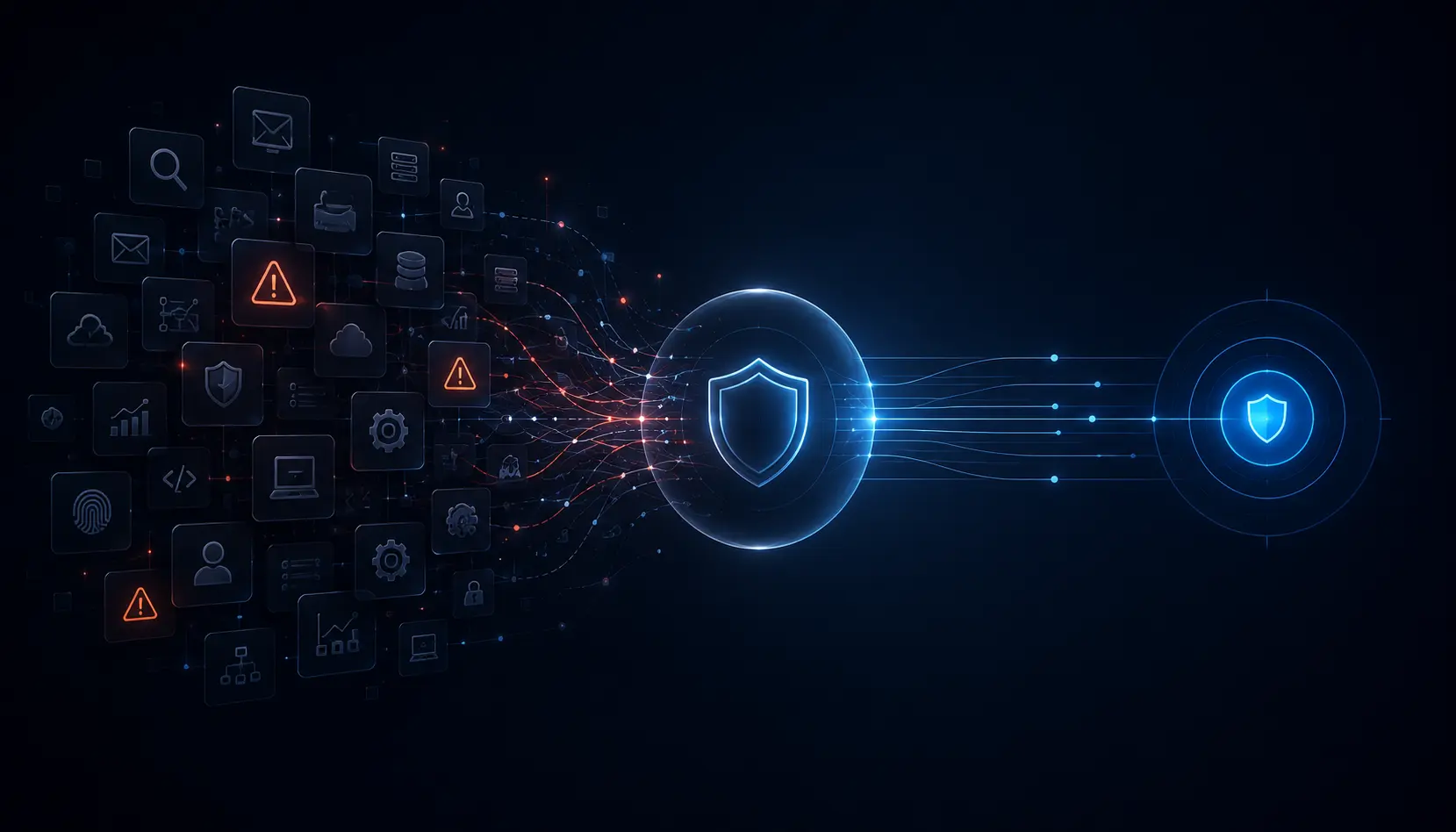
Today, however, the industry finds itself in a different phase. The conversation has shifted from solving new problems to expanding existing products. Every release introduces more capabilities, more dashboards, more AI assistants, more analytics, more integrations, and more modules. Security platforms are no longer judged by how effectively they solve a problem, but by how many capabilities they can claim.
This is feature inflation.
Unlike price inflation, feature inflation doesn’t increase the cost of buying software. It increases the cost of using it.
The race no one intended to run
No cybersecurity vendor sets out to build unnecessary complexity. Feature inflation is a natural outcome of a highly competitive market.
When detection capabilities begin to converge, vendors compete on breadth. If every platform offers strong endpoint detection, the next release adds cloud posture management. The next adds identity analytics. Then attack surface management, threat intelligence, exposure scoring, automation, AI copilots, executive reporting, and countless other enhancements.
The result is a market where every product promises to be a platform.
For buyers, distinguishing meaningful innovation from incremental additions becomes increasingly difficult.
This isn’t because innovation has stopped. Far from it. Many of today’s capabilities are technically impressive. The problem is that innovation is increasingly measured by what a product contains rather than what it eliminates.
Every feature has an operational cost
Software features are rarely free. Every new capability introduces decisions.
- Should it be enabled?
- Who owns it?
- How should it be configured?
- What happens when it generates alerts?
- How does it integrate with existing workflows?
- Who maintains it?
These questions rarely appear in product demonstrations, yet they define the day-to-day reality of operating a modern security program.
A security team doesn’t simply inherit another capability. It inherits another responsibility.
Over time, these responsibilities accumulate. Analysts learn multiple interfaces. Administrators manage overlapping policies. Teams spend more time understanding how tools interact than improving how security operates.
Ironically, products designed to reduce risk can increase operational overhead if every enhancement demands additional attention.
AI is accelerating the cycle
Artificial intelligence has introduced extraordinary opportunities for cybersecurity. It can accelerate investigations, identify patterns at scale, summarize complex incidents, and reduce repetitive work.
However, AI is also accelerating feature inflation.
Many products now include AI chat interfaces, AI assistants, AI-generated summaries, AI recommendations, AI scoring, AI search, and AI copilots. While each capability may provide value in isolation, together they risk becoming another layer of functionality that users must understand, evaluate, and trust.
The industry’s challenge is no longer whether AI can generate insights. It is whether those insights simplify decisions or merely create another stream of information to review.
Technology should reduce cognitive load, not redistribute it.
Buyers are asking different questions
The way enterprises evaluate cybersecurity solutions is quietly changing.
For years, procurement conversations revolved around feature matrices.
- Does it support this integration?
- Does it cover this framework?
- Does it include this capability?
These questions remain important, but they are no longer sufficient.
Security leaders increasingly operate in environments where skilled personnel are limited, regulatory obligations are expanding, and budgets are expected to deliver measurable outcomes. Under those conditions, the defining question is no longer, “What else can this platform do?”
It is, “What operational burden does this platform remove?”
That distinction is subtle but significant.
Removing twenty hours of repetitive investigation each week may create more value than adding twenty new capabilities that require continuous management.
The next era won’t be won by adding more features
Feature inflation is a symptom of an industry that has spent years equating innovation with expansion. More capabilities, broader platforms, and longer release notes have become the default way to demonstrate progress.
But customers aren’t asking for more software to manage. They’re asking for less work to do.
The next generation of cybersecurity won’t be defined by who offers the most features. It will be defined by who removes the most operational friction.
That means technology should no longer stop at detecting threats or presenting recommendations. It should take responsibility for the repetitive work that follows triaging alerts, gathering evidence, correlating context, documenting findings, and initiating the right response. These are not activities that create strategic value; they are the operational overhead that prevents security teams from focusing on the decisions only humans can make.
This shift requires a different way of thinking about cybersecurity products. Instead of asking, “What new capability can we add?” we should be asking, “What work can we eliminate?”
That philosophy is what has shaped our thinking behind Vokter.
We didn’t set out to build another dashboard, another AI copilot, or another layer of analytics. Enterprises already have powerful EDRs, SIEMs, XDR platforms, and threat intelligence solutions. Adding another console to monitor would simply contribute to the very problem the industry is trying to solve.
Instead, Vokter was designed around a different premise: keep the security stack organisations already trust, but remove the manual effort required to operate it. Rather than replacing existing tools, it works across them—autonomously triaging alerts, investigating incidents, correlating evidence, recommending actions, and producing the documentation analysts would otherwise create manually.
That isn’t about adding another feature.
It’s about removing thousands of repetitive tasks that quietly consume the capacity of every security operations team.
As our industry enters its next phase, I believe we’ll stop asking which platform has the longest feature list. We’ll start asking a far more meaningful question:
How much operational effort did this platform eliminate?
The cybersecurity platforms that shape the next decade won’t be the ones that add the most capabilities. They’ll be the ones that remove the most manual work freeing security teams to focus on judgement, resilience, and the threats that truly matter.
About Author
Fredrik Jubran, Vice President at G’Secure Labs, leads global cybersecurity strategy and operations. With over two decades of extensive experience across IT and cybersecurity landscape, Fredrik brings deep domain expertise in Security Operations Center (SOC), Managed Detection & Response (MDR), Governance & Compliance (GRC), and cloud-security services.
More insights
The Tempo of Modern Security Operations
What’s inside Security operations are no longer defined simply by how many alerts a team handles or how many tools it runs. They are increasingly…
Read article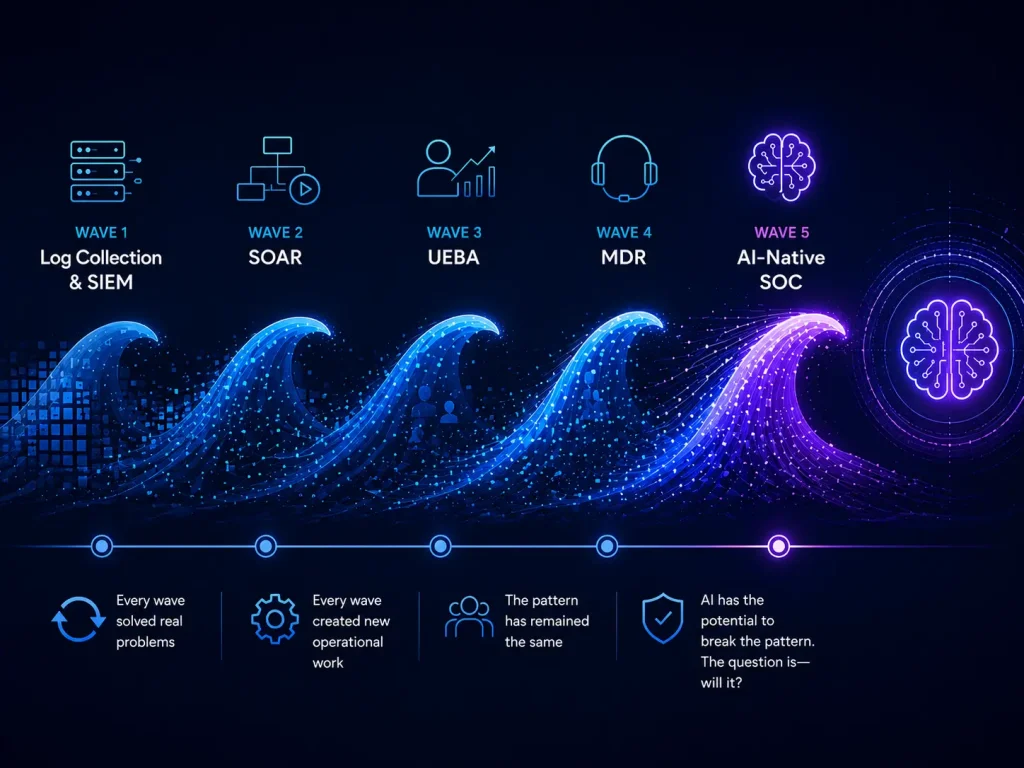
Five Automation Waves in the SOC and The Pattern the AI Wave Has Not Broken Yet
Every wave of security operations automation has promised the same thing: less work and faster response for security teams. Every wave has delivered genuine innovation.…
Read article
The Economics Behind Every AI SOC
AI SOCs promises predictable security outcomes. Faster investigations. Lower analyst workloads. Quicker response. Better resilience. Behind every fixed-price managed service, however, sits a variable that…
Read article