
NIS2 and Your SOC: A Practical Compliance Checklist
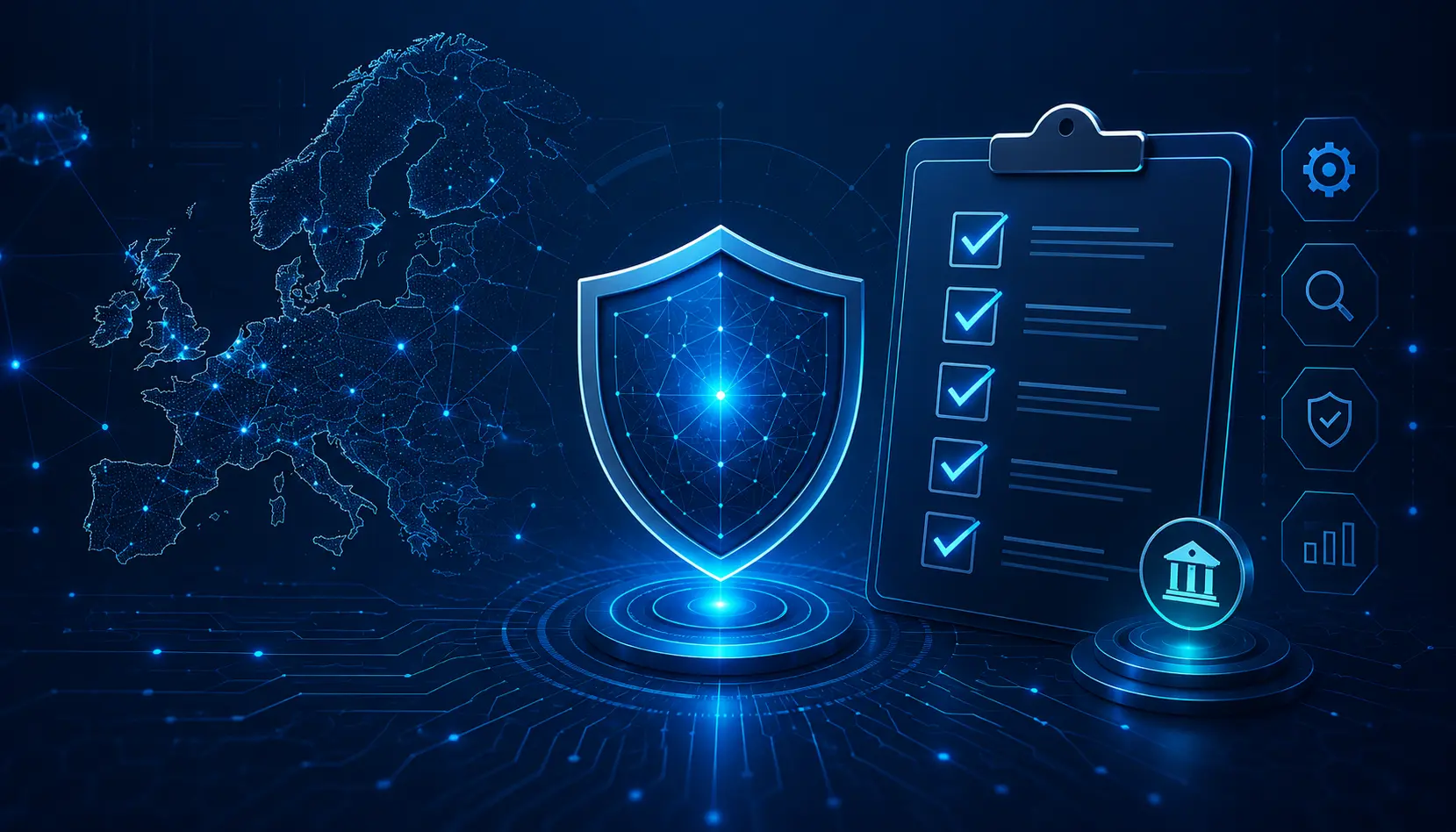
NIS2 SOC requirements centre on continuous security monitoring, fast incident detection and structured notification to authorities. The NIS2 directive expects in-scope organisations to operate risk-based security measures, detect incidents promptly, and report significant ones to their national CSIRT or competent authority within tight timeframes. A modern security operations centre (SOC) is the operational backbone that makes these obligations achievable, by maintaining 24/7 visibility, triaging alerts, investigating threats, and producing the evidence regulators expect.
This article sets out a practical checklist of what NIS2 expects from security monitoring and incident response, who is in scope, and how a SOC, supported by AI, helps you meet each obligation.
Key takeaways
- NIS2 was adopted in 2022 as an EU directive; member states transposed it into national law, with a transposition deadline of October 2024, though timing and detail vary by country.
- The directive distinguishes essential and important entities across critical and digital sectors, with broadly similar obligations but differing supervisory regimes.
- Core NIS2 SOC requirements include risk-management measures, incident detection, structured incident notification, supply-chain security, and management accountability.
- Incident reporting follows a phased model: an early warning shortly after awareness, a fuller notification, and a final report later, with exact windows defined in national law.
- An AI SOC strengthens detection and reporting by accelerating triage, investigation, and the generation of audit-ready evidence.
What does NIS2 require of a SOC?
The NIS2 directive modernises and broadens the EU’s earlier network and information security rules. For a SOC, the practical implications fall into a handful of areas: you must be able to detect incidents, respond to them, notify the right authorities, manage risk across your supply chain, and demonstrate that senior management oversees all of this. NIS2 does not mandate a specific technology or operating model. It sets outcomes, and a SOC is how most organisations achieve those outcomes day to day.
Crucially, NIS2 raises the bar on accountability. Management bodies are expected to approve and oversee cybersecurity risk-management measures, and members can be held responsible for failures. That shifts security monitoring from a purely technical concern to a governance obligation, and it makes consistent, evidenced SOC operations a board-level priority.
Who is in scope: essential and important entities
NIS2 applies to medium and large organisations operating in sectors the directive considers critical, and it classifies them as either essential entities or important entities. The split reflects how critical a sector is and the size of the organisation, rather than a difference in the security expected.
- Essential entities typically include sectors such as energy, transport, banking, financial market infrastructure, health, drinking and waste water, digital infrastructure, and public administration.
- Important entities typically include sectors such as postal and courier services, waste management, manufacturing of certain products, food production and distribution, and digital providers.
Both categories must implement comparable risk-management measures and meet the same reporting duties. The principal difference lies in supervision: essential entities face proactive, ongoing oversight, while important entities are generally supervised reactively, after an incident or indication of non-compliance. Because national transposition varies, organisations should confirm their classification under the law of each member state in which they operate.
The core NIS2 SOC requirements checklist
The table below summarises the main NIS2 obligations relevant to security monitoring and incident response, and how a SOC addresses each one.
| NIS2 area | What the directive expects | How a SOC delivers it |
|---|---|---|
| Risk-management measures | An all-hazards, risk-based approach covering policies, asset management, and security of operations. | Continuous monitoring across endpoints, network, cloud and identity; baseline detection content mapped to known threats. |
| Incident detection | Capability to detect anomalies and significant incidents promptly. | 24/7 telemetry collection, correlation, and alert triage to surface genuine threats quickly. |
| Incident handling | Defined processes to contain, respond to, and recover from incidents. | Documented response playbooks, containment actions, and coordinated remediation. |
| Incident notification | Phased reporting to the CSIRT or competent authority within defined windows. | Incident records, timelines, and report drafts that feed regulatory notifications. |
| Supply-chain security | Assessment and management of risks from suppliers and service providers. | Monitoring of third-party access and integrations; detection of supplier-originated activity. |
| Business continuity | Backup management, disaster recovery, and crisis management. | Detection of events affecting availability; support for recovery and post-incident review. |
| Management accountability | Approval and oversight of measures by the management body. | Reporting dashboards and evidence that demonstrate oversight and effectiveness. |
| Evidence and audit | Ability to demonstrate compliance to supervisors. | Retained logs, investigation records, and audit-ready documentation. |
NIS2 incident reporting: what your SOC must support
NIS2 incident reporting is one of the directive’s most operationally demanding requirements. For significant incidents, the directive sets out a phased notification process to the national CSIRT or competent authority:
- An early warning shortly after the organisation becomes aware of a significant incident, indicating whether it may be caused by unlawful or malicious acts or could have cross-border impact.
- A fuller incident notification with an initial assessment, including severity, impact, and any indicators of compromise.
- A final report later, describing the incident, its root cause, mitigation, and any cross-border effects.
The exact deadlines, including the short window for the initial early warning, are defined in each member state’s transposition of the directive, so organisations operating across borders should confirm the precise timeframes that apply to them. What matters operationally is that your SOC can determine quickly whether an incident is significant, capture the facts needed for each stage, and produce accurate notifications under time pressure. This is difficult to do manually at scale, which is where automation and AI become decisive.
How an AI SOC meets NIS2 SOC requirements
The hardest parts of NIS2 compliance are speed and consistency: detecting significant incidents quickly, investigating them thoroughly, and reporting them accurately within tight windows. An AI SOC is built for exactly this. AI-driven triage filters noise and prioritises genuine threats, reducing the delay between an event occurring and an analyst acting on it. Automated investigation correlates signals across the estate, reconstructs the attack path, and assembles the context needed to judge whether an incident is significant under NIS2.
Just as importantly, an AI SOC generates structured, time-stamped records as it works. That documentation, covering detection, investigation, containment, and outcome, becomes the evidence base for both incident notifications and supervisory audits. Vokter Hybrid applies AI-driven Level 1 triage and investigation over your existing SIEM and SOAR, strengthening detection and reporting without replacing your stack. For organisations that need named analysts, threat hunting, forensics, and a contractual SLA alongside the AI, Vokter Guardian combines AI with 24/7 human oversight, with NIS2- and DORA-aligned evidence built in.
Because Nordic SOC operates as an independent, EU-sovereign provider with data held in EU cloud regions, monitoring and evidence remain within European jurisdiction, which matters for both NIS2 obligations and broader EU data sovereignty requirements. Organisations subject to financial-sector rules should also review how these capabilities map to DORA compliance, which applies from 17 January 2025 and shares much of NIS2’s emphasis on incident reporting and operational resilience.
A practical readiness checklist
Use the following checklist to assess whether your security monitoring and incident response are ready for NIS2:
- Confirm your classification as an essential or important entity in each member state where you operate.
- Map your risk-management measures to the directive’s requirements and document them.
- Ensure 24/7 monitoring coverage across endpoints, network, cloud, and identity.
- Define and test incident-handling playbooks, including containment and recovery.
- Establish a process to assess incident significance quickly and consistently.
- Build a phased notification workflow aligned to your national transposition’s deadlines.
- Extend monitoring and risk assessment to suppliers and third-party access.
- Provide management with regular, evidenced reporting on cyber risk and incidents.
- Retain logs, investigation records, and notifications as audit-ready evidence.
- Review readiness regularly and after any significant incident or regulatory change.
If you would like to assess your NIS2 readiness against your current monitoring and reporting capability, contact Nordic SOC to discuss your environment.
Conclusion
NIS2 turns continuous monitoring, rapid incident response, and structured reporting from good practice into a legal and governance obligation. A capable SOC is how organisations meet these expectations in practice, and an AI SOC makes the speed, consistency, and evidence the directive demands realistic at scale. With transposition timelines varying by country, the practical step is to confirm your obligations under the national law that applies to you and ensure your monitoring and reporting can satisfy them.
Frequently asked questions
What does NIS2 require of a SOC?
When did NIS2 come into force?
What is the difference between essential and important entities under NIS2?
How does an AI SOC help with NIS2 compliance?
More insights

The Tempo of Modern Security Operations
What’s inside Security operations are no longer defined simply by how many alerts a team handles or how many tools it runs. They are increasingly…
Read article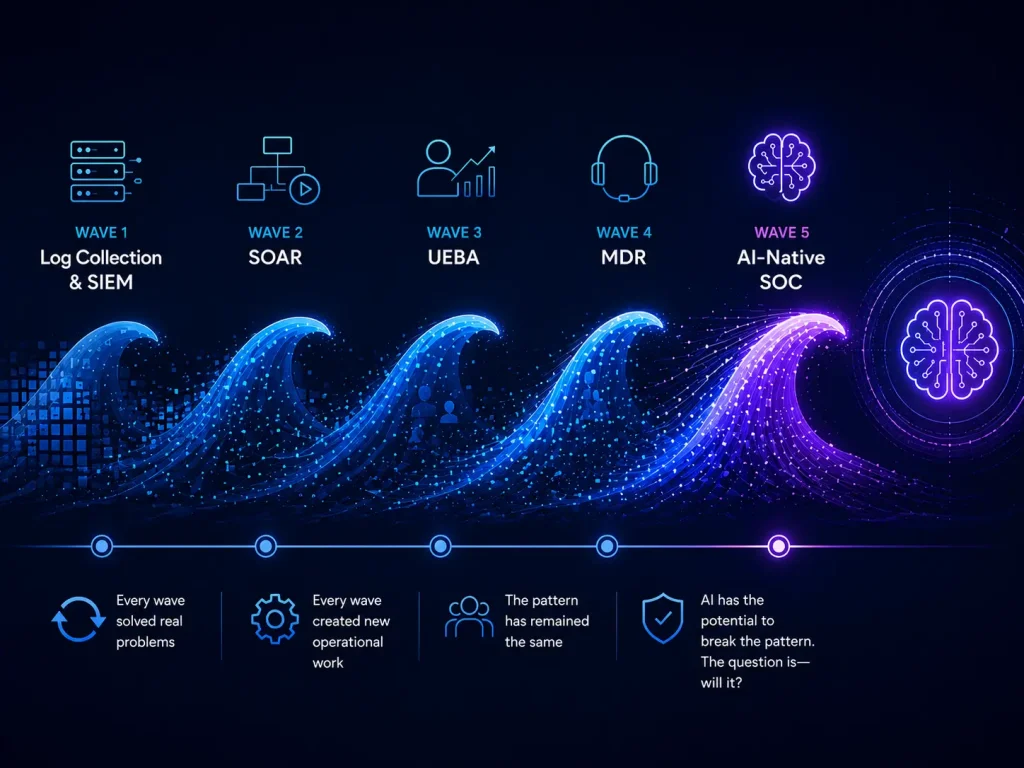
Five Automation Waves in the SOC and The Pattern the AI Wave Has Not Broken Yet
Every wave of security operations automation has promised the same thing: less work and faster response for security teams. Every wave has delivered genuine innovation.…
Read article
The Economics Behind Every AI SOC
AI SOCs promises predictable security outcomes. Faster investigations. Lower analyst workloads. Quicker response. Better resilience. Behind every fixed-price managed service, however, sits a variable that…
Read article